Showing posts with label risk. Show all posts

Wednesday, October 6, 2010

Lean machine(s): chasing the contexts

There is a perennial game in health and social care called assessment and evaluation: the game could also be called 'CTC' - 'chasing the context'.

Relativity lies not only in the realm of physics and philosophy.

When I say relativity I am referring of course to the influence and impact of a health and social care situation from the constantly changing perspective of each of several different players:
  • the patient;
  • carer;
  • nurse;
  • doctor;
  • manager;
  • medical ward;
  • community mental health team;
  • commissioner.
Usually, the context collapses to a specific problem (a situation) and the players set to solve a care problem presented by an individual -
  • a client, resident or patient;
and their -
  • relatives;
  • residential care home manager;
  • residential care home staff nurse and team;
  • community mental health nurse;
  • medical personnel.

Context directs, dictates, and shapes health and social care theory, practice, management and policy.

This relativism can also subvert, sublime, confuse and stymie plans, common sense notions, creativity, innovation and management directives.

Like a tide this relativity picks us up and re-figures, re-paints and shifts the location of everything - including measures and how they are used.

Context is all! - so the saying goes. But context never wholly reveals itself. For that is another situation, another context, another side, another coin.

For context there are key defining parameters (location, diagnoses, risk, need, physical, mental, holistic ...) all of these are couched or spring from time.

So, the game calls for us and the tide teases us to measure and evaluate. This coast is never clear, but how long is it now? Where are the pathways now? Where will they be again?

As we travel (and travail) to and from this context to that - thresholds are also altered: up and down and always around; the way of life and ..... .

Image source:
http://www.esd112.org/edtech/no_limit/rs_archive.cfm

Wednesday, March 10, 2010

Walls, Lines, Dykes and Health Care


We are accustomed to defensive care and medicine.


Costs aside it seems the driving mantra (always served with a smile) is avoid risk at all cost; but we also recognise the need to balance risk in its negative and positive forms.


When it comes to thinking about care though we need to be open to new ideas, territories and opportunities and what being defensive means in practice and theory in the 21st century.


Additional links:

http://en.wikipedia.org/wiki/Offa%27s_Dyke
It is unlikely that the Dyke was constructed as a defensive earthwork. No army of the period could defend a 120 plus mile long earthwork. It is more likely that the Dyke was constructed as a political statement of power and intent.
http://en.wikipedia.org/wiki/Great_Wall_of_China

Wednesday, October 8, 2008

20/20 vision minus 1, 2, or 4 blind spots....

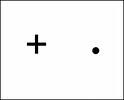
blind spot experimentBasic science classes very quickly introduce students to 'the eye' and vision.

This includes the simple experiment that can be done which reveals the blind spot.
Here's an example from Service Works Consulting:

Consulting companies pride themselves on knowledge, foresight and expertise. This is fine if there is only one blind spot to deal with, but of course we each have two. From the perspective of project management there are many more blind spots.

Hodges' model suggests there are potentially four;
five even if we include the spiritual domain.

A benefit of using Hodges' model* is that just as in normal vision our two eyes overlap and compensate for the blind spots; so attention paid to just one additional care domain may diminish the impact of care domain blindness.


3 out of 4 domains - is better (more holistic) than - 2 out of 4.

The problem in health and social care, is that any one of four blind spots (ironically the site of the optic nerve bundle) can become a fuse for trouble or disaster.

If you have the gift of vision - best to use it.#
*cognitively or deliberately on paper or computer

Image source with many thanks: John Eric Hughes

Additional links:
Visual acuity: http://en.wikipedia.org/wiki/Visual_acuity
Accessibility resources: Intrapersonal domain links page (scroll down).

#Wish I had and could do that!