Showing posts with label context. Show all posts

Thursday, October 7, 2010

FROM: A community mental health context TO: Acute EMR/EHR and other ...

or: Will 21st Century health and social care informatics truly begin on Sunday 10 10 10 ?

I've been a nurse AND info tech / informatics enthusiast since 1981. As an advocate of info-tech as a means to improve the quality, effectiveness and safety of health care - I must confess; I feel I have let down those colleagues purely there to 'nurse'. (Don't worry, I am also a realist and post-therapy!).

After 20+ plus years the nearest we (the team and I) got to a system that answered our questions was a small PICK database and a later MS Access database. These focused on referrals and data capture - demographics, problems, interventions (WHO and what) and outcomes. Although the number of data items was not great, no more than 30 the insights we could glean from queries was surprising. People versed with databases, datasets and research readily appreciate how even small datasets, carefully thought out and planned, can answer a diverse range of questions (and generate countless new ones too!).

I noticed in the mid-1980s to mid-1990s the development of customer management software and recognised that clinicians have a need: caseload management.

Even now the requirement of 'X' visits per day, the number of information systems and lack of integration (health - social care) mean that in many instances there is still no readily accessible caseload manager for the individual practitioner. This is an outcome and amid all the talk around 'engagement' (with a 'E').

Perversely, ironically, paradoxically (take your pick) at a time when Lean is (presented and) needed, there are scarce resources to do the things that should now be embedded (routinised) into the life history of the professional. This includes what the professionals do WITH the patients, carers, data, information ...

I speak to student nurses (and other disciplines) regularly as a nurse mentor and sign-off mentor. Their exposure to health care informatics to me is minimal, adhoc, and when it has happened it has signally failed to strike a cord. A very small (and so non-significant*?) sample admittedly.

Informatics remains an academic 'must do'.
Perhaps 21st century informatics only begins on Sunday -
101010
Whatever:
as it stands informatics is a management pursuit.


Slippage is a fact of project management, but words present their own challenge when target driven 'secondary' uses become 'primary'.

*surely not.

[A version of this post first appeared on the Healthcare Information and Management Systems Society HIMSS group on LinkedIn.]

Wednesday, October 6, 2010

Lean machine(s): chasing the contexts

There is a perennial game in health and social care called assessment and evaluation: the game could also be called 'CTC' - 'chasing the context'.

Relativity lies not only in the realm of physics and philosophy.

When I say relativity I am referring of course to the influence and impact of a health and social care situation from the constantly changing perspective of each of several different players:
  • the patient;
  • carer;
  • nurse;
  • doctor;
  • manager;
  • medical ward;
  • community mental health team;
  • commissioner.
Usually, the context collapses to a specific problem (a situation) and the players set to solve a care problem presented by an individual -
  • a client, resident or patient;
and their -
  • relatives;
  • residential care home manager;
  • residential care home staff nurse and team;
  • community mental health nurse;
  • medical personnel.

Context directs, dictates, and shapes health and social care theory, practice, management and policy.

This relativism can also subvert, sublime, confuse and stymie plans, common sense notions, creativity, innovation and management directives.

Like a tide this relativity picks us up and re-figures, re-paints and shifts the location of everything - including measures and how they are used.

Context is all! - so the saying goes. But context never wholly reveals itself. For that is another situation, another context, another side, another coin.

For context there are key defining parameters (location, diagnoses, risk, need, physical, mental, holistic ...) all of these are couched or spring from time.

So, the game calls for us and the tide teases us to measure and evaluate. This coast is never clear, but how long is it now? Where are the pathways now? Where will they be again?

As we travel (and travail) to and from this context to that - thresholds are also altered: up and down and always around; the way of life and ..... .

Image source:
http://www.esd112.org/edtech/no_limit/rs_archive.cfm

Thursday, September 2, 2010

Drupal musings 13: Packaged care and modules

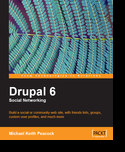
Packt book cover 'Social Networking'Although I do not need to sit at the front for presentations anymore, I did so at Drupalcon as the electricity plugs were few and forward. There was a bonus. Being in the right place... I picked up a free book c/o Packt Publishing who were among the exhibitors and valued sponsors. The book is Michael Peacock's Social Networking (don't panic I'm not going to review it!). Since returning from Copenhagen I've been using Drupal 6 and 7 on a daily basis. Checking just what some of the key modules, such as Taxonomy, Taxonomy Manager, and Groups have to offer. What are the configuration options and how well do modules integrate?

In the book Michael lists the Drupal modules he relies on to create a site worthy of the book's title. He explains that many modules are themselves 'packaged' for example - the Activity module:

Activity: Activity
Activity: Activity history
Activity: Comment activity
Activity: Node activity
Activity: OG# activity (#organic groups) p.140

This highlights the multifunctional capability of modules which leads me to wonder* about what functionality might be found in future modules:

Intrapersonal: Communication
Intrapersonal: Mood
Intrapersonal: Cognition
Intrapersonal: Diagnosis
Intrapersonal: Interests
Intrapersonal: Risk
Intrapersonal: Skills-Education

Sciences: Observations
Sciences: Physical attributes
Sciences: Mobility
Sciences: Nutrition
Sciences: Diagnosis
Sciences: Physical safety

Sociology: Relationships
Sociology: Ethnicity
Sociology: Interests
Sociology: Religion
Sociology: Carer assessment

Political: Marital status
Political: Employment
Political: Benefits-Welfare
Political: Capacity
Political: Autonomy
Political: Mental Health Act status

Further news:
The new PC is ordered 10-12 days until its arrival. Yes, I could go DIY, but I'm busy.

This Saturday evening I will have some 4-5 hours with the client of the basic Drupal 6 site. Very much looking forward to that. Must remember KISS!

*Not necessarily an actual proposal!

Friday, August 27, 2010

Drupal musings 12: Semantic Web, ICNP, Case studies and Care domains

Drupalcon 2010 Copenhagen is over for me. It's been a really useful week: awesome indeed. My head is dizzy with all the options, sources and resources to consider. I will contact the London Drupalcon group for 2011 with some suggestions regards beginners, networking and outreach.

Ever since setting off on the Drupal road, the semantic web has been a constant item of street furniture. In Szeged '08, Paris last year and this past week in Copenhagen the semantic web, RDF and terminologies have had a pivotal presence. I did not attend all the rdf / SW sessions but Wednesday's Semantic Terminologies was sit on the floor popular (even though at that point the program hit a bottleneck from 6 to 3 streams). Whatever the cause - I was there, late and my pivot ached (no padding!).

As a Drupal 7 prelude I'm creating a Drupal 6 site, a basic homepage for someone. The content for the latter is fixed - sorted. Apart from the pages for the archive, the new h2cm content involves me figuring out how to combine:
  1. the health career model;
  2. nursing - in theory and practice;
  3. external sources and resources;
  4. and Drupal.
Johannes Wehner's terminology session above did not emphasize RDF, but highlighted Open Linked Data by means of Open Calais as a tool to extend existing content. I've downloaded the Drupal OC module and obtained a key.

As for the list: #1 The health career model is straight forward really. Four care domains - get on with it! From there though it is quite a reach to encompass #2 & #3. My options appear to be:
  • free tagging, auto tagging - let the users of the site decide;
  • pre-define a data set, a terminology (classification) for the health career model;
  • use an existing nursing classification / terminology scheme - perhaps a subset.
Before I decide I need to be aware of what is available. I e-mailed Derek Hoy in Scotland - contact for the International Classification for Nursing Practice® [ICNP]. This is another thing I pick up, put down. ... Now thanks to Derek I'm sorted now with ICNP downloaded (and I will need a module to import .csv files). There are videos on the ICNP website.

I have followed the development of nursing terminologies for quite some time. The most striking thing to me is how removed they are from the day-to-night life on wards and other care encounter situations. With mental health as a Cinderella in terms of the politics and recognition of nursing service provision I am in effect professionally twice removed. For the vast majority of nurses on the ground and from where I work in community mental health the ICNP, SNOMED CT, Omaha and other schemes are rather esoteric things. They are there in the background, part of management and reporting 'function'. This is not to say that the above initiatives have few followers, or lacks experts in this field. Make no mistake nursing has its own geeks, nursing classification its experts!

The scope of ICNP makes it a great candidate (from the website) -

Diagnosis/outcome

Interventions

Individual 7 axes
  1. focus
  2. action
  3. client
  4. judgement
  5. location
  6. means
  7. time
Plus:
  • it's International;
  • it's by nurses, for nurses;
  • it has momentum (political and financial support);
  • So it is credible, and research based.
Despite this, I must take a critical look at what is available for my needs and time available. All the above provide way too much for a first bash - prototype, proof of concept. I have the luxury of not worrying about safety. My project does not constitute an electronic health record or other variant. Yes, I want to prove the health career model and to this end I must also find or create several nursing case studies to interrogate within Drupal and h2cm.

Perhaps as things improve economically, nursing classification will be revived and will allowed the time to fully mature? I recall in 2006 plans to explore mental health within SNOMED which unfortunately did not materialise. So, when I say mature, I mean like cheese in the holistic senses of the ingredients: nursing care concepts across contexts that also incorporate self-care, recovery, demographic trends ...; and the process across communities of practice (integrated care) through to academic and management applications - research / reporting.

In March 2010 plans were announced of plans to harmonize the efforts of the ICNP and SNOMED CT nursing:

http://www.ihtsdo.org/nc/about-ihtsdo/harmonization/icn/?sword_list[]=nursing

So, with a possible jumpstart - a sprint for my site this autumn in Manchester, UK and work afoot to make nursing classification matter on the 'ground' there is more to follow on several fronts. ... I remember a presentation Derek did in the 1990s about classification and making nursing visible - let's do it!

contact: h2cmng @ yahoo.co.uk

Sunday, March 7, 2010

CfP International Journal of People-Oriented Programming (IJPOP)

********************* CALL FOR PAPERS *********************
(edited here for length)
*** INAUGURAL ISSUE ***

SUBMISSION DUE DATE: 1st May 2010

International Journal of People-Oriented Programming (IJPOP)

Official publication of the Information Resources Management Association
http://www.igi-global.com/IJPOP

Co-Editors-in-Chief: Steve Goschnick & Sandrine Balbo
Published: Semi-annual (both in Print and Electronic form)

Mission of IJPOP:

The International Journal of People-Oriented Programming (IJPOP) is cross-discipline in range yet singularly focused on empowering individuals to conceptualise, design, program, configure and orchestrate Internet-powered mashups, game mods (modifications), aggregate and structure personal media and build standalone cloud-based and client-side applications (on smartphones, netbooks, laptops, desktops, home network and novel appliances) – into self-fashioned tools and products that ultimately suit the user's own unique needs and aspirations. Other individuals may well take up such apps, mods and mashups for themselves, further customising, enhancing and embellishing them, or they may in part be used in a social or family context (to the benefit of the collective aspirations of those Social Worlds of which the individual is a part) – nonetheless, the focus of composition, development and customisation is on a product for oneself, upon theory, concepts, techniques, methodologies and ultimately tools that service a market of one. Our mission is to be the first journal that comes to mind to academics and practitioners alike and remain the best with regard to all aspects of People-Oriented Programming. Our papers and reviews will be insightful and compelling to both educators and researchers, and often to a wider audience too – the people for whom this paradigm of software development has come about.

SCOPE:

People-Oriented Programming requires high-level tools to empower both the technical and non-technical user, which in turn calls upon research into meta-models that inform design and construction, that aid comparisons of these tools, and facilitates the interchange of content between them. The meta-models of most interest to POP initially, are drawn from two disparate disciplines – the Task Analysis (TA) and Agent-Oriented (AO) paradigms– both of which often have models with representations of entities matching the needs of POP, e.g. goal, task, object, agent, individual, role, intention and communication. Several AO architectures and methodologies have called upon branches of Psychology to formulate AO meta-models that incorporate mentalistic notions such as perception, motivation and intention, but which are most often aimed at constructing artificial humans and the like. In POP we too call upon those same Psychologies and similarly enhance and formulate meta-models and methodologies influenced by them, but with the intention of augmenting and empowering the individual human, in areas where they themselves desire aid or have identified a gap in their own abilities or resources, which they want to enhance.

From Sociology, POP draws upon ethnography with a focus on self-ethnography using tools such as cultural probes, life blogs and life logs to capture aspects of the individual's own life, themselves (or through a life coach), from which they draw the desire and/or frame the need for new technological artefacts to be used in their own lives. Interactivity, with respect to facilitating and streamlining a regular user's intention to build their own artefacts, and situatedness in terms of the individual's current location and activities, are two other facets of HCI (human computer interaction) that POP encompasses.

Video gaming is the first application area where large numbers of everyday users have been able to envisage and then developed their own innovations within existing games. So-called game mods are working examples of POP where players have appropriated userfriendly tools, usually built into the game engines by the vendors (e.g. The Sims, World of Warcraft, etc.). Video games have joined other media (e.g. movie, novel, comic) in the new genre of transmedia storytelling (e.g. franchises such as Tomb Raider, The Matrix, Harry Potter), allowing the player to enter the story 'so far', extending it in the 'now', constructing their own individualised narratives and increasingly, with the capability to enhance and extend the realm of the game itself. These individual constructed game mods allow players to extend virtual realms and narratives in real-time, in directions often unforeseen by the game engine makers. Such activities are increasingly a part of an individual's entertainment and education. Game modding as described, and the engines and tools that enable it, are within the scope of POP.

Internet-based mashup tools (e.g. Google Wave) have opened up a second application front beyond game mods, where POP is likely to gain mass adoption and occasionally produce radical user innovation. The selection and orchestration of disparate distributed services (e.g. web services; information feeds; the Cloud) by an individual within a user-friendly toolkit or framework, is also in the scope of POP. While the formal protocols and the technical enactment of such specific services are of little interest here, the quality, access, usage, aggregation and orchestration of them by the individual themselves, into a personalised synergy of capability made available through some enacting technology, are of acute interest to POP. Modeling techniques and people-friendly notations that bridge and coordinate distributed services together with local resources within POP tools – ones that the layperson can understand and use in conceptualising their designs - encompasses another cross-discipline facet of POP.

RECOMMENDED TOPICS:

Topics to be discussed in this journal include (but are not limited to) the following:

* Activity theory and modeling
* Agent meta-models, mental models
* Alert filter and notification software, automated task assistance
* Augmented reality, augmented interaction
* Automating personal ontologies, personalised content generation
* Client-side conceptual modeling
* Computational models from psychology
* Context-aware systems, location-aware computing, ubiquitous computing
* Cultural probes, self-ethnography
* End-user composition, end-user multi-agent systems
* Game development support tools
* Game mods, game engines, open game engines
* Home network applications
* Human-centred software development
* Interface generators, XML-based UI notation generators
* Interface metaphors
* Life logs, life blogs, feed aggregators
* Mashups, mashup tools, cloud mashups
* Model-driven design, didactic models, model-based design and implementation
* New generation visual programming
* Personal interaction styles, touch and gestures
* People-Oriented Programming (POP)
* People-Oriented Programming case studies
* Personal ontologies and taxonomies
* Personalisation, individualisation, market of one
* Personas and actors
* Real-time narrative generation engines
* Role-based modeling
* Service science for individuals
* Situated computation, social proximity applications
* Smart-phone mashups, home network mashups, home media mashups
* Software analysis & design, software process modeling
* Software component selection
* Speech and natural language interfaces
* Storyboarding, scenarios, picture scenarios
* Task flow diagrams, Task-based design
* Task models, task analysis, cognitive task models, concurrent task modeling
* Use case models, user interface XML notations
* User-centered design, usage-centered design
* User interface tools, XML-based UI notations
* User modelling, end user programming, end user development
* Wearable computing, bodyware
* Web-service orchestration, web-service co-ordination


SUBMITTING TO IJPOP:
Prospective authors should note that only original and previously unpublished articles will be considered. INTERESTED AUTHORS MUST CONSULT THE JOURNAL’S GUIDELINES FOR MANUSCRIPT SUBMISSIONS at:
http://www.igi-global.com/Files/AuthorEditor/guidelinessubmission.pdf

PRIOR TO SUBMISSION. All article submissions will be forwarded to at least three members of the Editorial Review Board of the journal for double-blind, peer review. Final decision regarding acceptance/revision/rejection will be based on the reviews received from the reviewers. All submissions must be forwarded electronically to: stevenbg AT unimelb.edu.au

All inquiries and submissions should be should be directed to the attention of:

Steve Goschnick
Co-Editor-in-Chief
International Journal of People-Oriented Programming
E-mail: stevenbg AT unimelb.edu.au
http://www.igi-global.com/IJPOP

Additional links:

Goschnick, S. (2009). People-Oriented Programming: from Agent-Oriented Analysis to the Design of Interactive Systems, In. J.A. Jacko (Ed.): Human-Computer Interaction, Part I, HCII 2009, LNCS 5610, pp. 836–845.

Tuesday, January 12, 2010

'situated' in Hodges' model #1

I'm not exactly sure how many times I've cut and pasted the paragraphs that introduce Hodges' model as person-centered and situated. Quite a few!

Thanks to the HIFA-2015 list I realised last week that there is no tag for 'situated' on W2tQ. Well, this post corrects that omission, but what does situated mean in Hodges' model?

Here is a definition c/o Google:
  • situated/s'ɪtʃueɪtɪd/
    Synonyms:
    • If something is situated in a particular place or position, it is in that place or position. ADJ adv ADJ v-link ADJ prep
      ...
Related phrases
  • If you situate something such as an idea or fact in a particular context, you relate it to that context, especially in order to understand it better.
    ...
Hodges' model is based on the belief that health and social care are multicontextual. Without wishing to substitute one term for another context and situation are inter-related and bear closer examination here on W2tQ.

Hodges' model prompts the user to consider that the person (-at-the-center) of care is simultaneously residing within four primary situations or contexts (five - if we include the spiritual aspects). Veterans and new recruits appreciate from the dizzy heights of the model, how quickly we find complexity in the multiple contexts that exist in health and social care. The many perspectives and views that must be taken into account to achieve safe, integrated and holistic care. Together with the above there are other definitions of relevance to scholars, champions and users of Hodges' model:
located: situated in a particular spot or position; "valuable centrally located urban land"; "strategically placed artillery"; "a house set on a ...
wordnetweb.princeton.edu/perl/webwn

In artificial intelligence and cognitive science, the term situated refers to an agent which is embedded in an environment. ...
en.wikipedia.org/wiki/Situated

Located in a specific place; Supplied with money or means
en.wiktionary.org/wiki/situated
The first definition about location is important as Hodges' model puts the person at the center. It is from there that the care domains are considered in turn and revisited as required. Hodges' model provides a locus around which care activities can be placed. Usually we view self-centeredness in a pejorative way. When you think about it though this is precisely what is needed to achieve person-centered care. In this case we need something that constantly re-centers - reorientates the subject(s) and agent(s) of care.

The second definition which looks to A.I. for inspiration is relevant as the concept of embodiment, embeddedness already has academic form* as a means to explore self-centeredness. Not only is the individual embedded in a (the) situation, but the carer (formal - informal) must also reside there and share to an extent the experience, if empathy, rapport and communication are to arise.

That final definition can be utilised due to the inclusion of means. People have skills, strengths and coping strategies and this sense of situated rings very true at present, with the emphasis on recovery, staying well, relapse prevention and adjusting to what may be permanent change. People also need knowledge as a means to maximise their health and well-being, which takes me back where I started with Health Information for All by 2015.

So, amid all the complexity, over-arching infrastructures, policies,
debate (and definitions!) it is refreshing that as I revel in the
scope of Hodges' model - two axes, four domains,
its holistic bandwidth... I can find the
word 'situated' planted
firmly
at the model's
center.


* Ref:
Paley, J. (2004) Clinical cognition and embodiment, International Journal of Nursing Studies, Volume 41, Issue 1, Pages 1-13.

Image source - with thanks: Ariel Bravy - http://www.arielbravy.com/photoblog/
http://www.arielbravy.com/photoblog/images/20060719214447_glenn%20x%20millenium%20park.jpg