Showing posts with label Drupalcons. Show all posts

Friday, September 24, 2010

Drupal musings 16: 1% digital and analogue memories

At Drupalcon in his keynotes Dries Buytaert has highlighted that Drupal now powers approximately 1% of the web. While 1% is not much especially given the total size of the internet with its day on day, hour by hour growth this is nonetheless a significant milestone. Especially when Dries speculates on the growth of Drupal projected ahead to 2020.

Like all digital media Drupal is a tool that extends our personal and cultural memories. As all the keynotes showed Drupal, PHP, HTML[5] all have histories of their own and a role to play in providing a surrogate memory. The media and technology [IBM] regularly predict how technology will change our lives, including how we remember.

Amid such speculation memory still makes us who we are. You and I have a yesterday, today - and we pray - a tomorrow.
This is the bootstrap that counts

Bootstrapping or booting refers to a group of metaphors that share a common meaning:
a self-sustaining process that proceeds without external help. ...
en.wikipedia.org/wiki/Bootstrap

Striking then the news this week that - dementia costs 'equal to 1% of global GDP'.

Wednesday, September 15, 2010

Drupal musings 15: modules and Drupalcon videos

Since picking up the health career model and publishing the model online in 1986 the term holistic bandwidth has emerged. The blog in 2006 and to date has seen other loosely defined terms:


Using Drupal 6 I've got to a position were I am getting to know core plus some contributed modules. One of the latter is webforms. It's bound to be help seeing what webforms can do in terms of one-way data submission, compared to using CCK - the content construction kit. In webforms the grid component holds great promise, but in creating a grid for music genres I notice there is no validation (which would be quite a trick!). Users should only be able to select one type of music they want to hear most of the time. The validation question is going to help force the issue of getting under the hood. All that reading revealed in previous posts is also needed to sort the theme too.

I remember first coming across the word instantiate. As I write, think about a h2cm glossary and experiment for real with Drupal 6 - I wonder whether the content types I create (in Drupal 7 especially) may help define some of the above and other terms?

The majority of the sessions from Drupalcon CPH are available on video.
There are some I still need to catch being in other sessions.

Wednesday, September 8, 2010

Drupal(con) musings 14: design, UI, UX, thinking and care

In his funny and very engaging session 'Designing UI with Seven' at Drupalcon CPH Mark Boulton discussed four user experience (UX) principles and introduced us to ten user interface (UI) guidelines.

Mark highlighted the need for a mental model and the challenge within publishing of there being someone who has the big picture. Who knows exactly what is going on? The health career model provides a model and can provide a canvas to support the big picture.

What really caught my attention though was as soon as Mark asserted -
"Don't make people think." -
I immediately thought -
'Make people care instead'.

Well, I'm not sure if an interface can do what public (mental) health policy, government public funded education programmes and the concerted efforts of the health professions has largely failed to achieve. The users of e-health information systems do need the design of the system to be transparent to them. IT mustn't get in the way. Mark's point of course is the the user's should be free to focus on the problem the system is to help solve. In health this includes:
  • recording of a health (and social) care record;
  • secure information / file management and access;
  • information governance, reporting and archiving;
  • timely, ready access for those who need to know;
  • ability to manipulate the record to obtain knowledge: from data > from information;
  • to provide patient (carer as advocate) access and verification;
  • remote access with rugged devices.
  • ...
This does not mean that people are oblivious to design: far from it (iThis - iThat!). My point is that as we follow Mark and other design expert's advice then users should be able to focus on care design and the care outputs arising.

So in health we need interfaces and user experiences that DO encourage reflection, thought: thinking.

P.S. In another session (or magazine!?) on creating mobile versions of sites the advice included getting rid of the crap - the clutter, the >1000px width adornments. Rhetoric aside - my design thought would be not to include anything that could be described in this way whatever the media type (maybe I should lighten up!) ;-)

To follow: update on my Drupal efforts.

Thursday, September 2, 2010

Drupal musings 13: Packaged care and modules

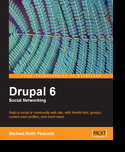
Packt book cover 'Social Networking'Although I do not need to sit at the front for presentations anymore, I did so at Drupalcon as the electricity plugs were few and forward. There was a bonus. Being in the right place... I picked up a free book c/o Packt Publishing who were among the exhibitors and valued sponsors. The book is Michael Peacock's Social Networking (don't panic I'm not going to review it!). Since returning from Copenhagen I've been using Drupal 6 and 7 on a daily basis. Checking just what some of the key modules, such as Taxonomy, Taxonomy Manager, and Groups have to offer. What are the configuration options and how well do modules integrate?

In the book Michael lists the Drupal modules he relies on to create a site worthy of the book's title. He explains that many modules are themselves 'packaged' for example - the Activity module:

Activity: Activity
Activity: Activity history
Activity: Comment activity
Activity: Node activity
Activity: OG# activity (#organic groups) p.140

This highlights the multifunctional capability of modules which leads me to wonder* about what functionality might be found in future modules:

Intrapersonal: Communication
Intrapersonal: Mood
Intrapersonal: Cognition
Intrapersonal: Diagnosis
Intrapersonal: Interests
Intrapersonal: Risk
Intrapersonal: Skills-Education

Sciences: Observations
Sciences: Physical attributes
Sciences: Mobility
Sciences: Nutrition
Sciences: Diagnosis
Sciences: Physical safety

Sociology: Relationships
Sociology: Ethnicity
Sociology: Interests
Sociology: Religion
Sociology: Carer assessment

Political: Marital status
Political: Employment
Political: Benefits-Welfare
Political: Capacity
Political: Autonomy
Political: Mental Health Act status

Further news:
The new PC is ordered 10-12 days until its arrival. Yes, I could go DIY, but I'm busy.

This Saturday evening I will have some 4-5 hours with the client of the basic Drupal 6 site. Very much looking forward to that. Must remember KISS!

*Not necessarily an actual proposal!

Friday, August 27, 2010

Drupal musings 12: Semantic Web, ICNP, Case studies and Care domains

Drupalcon 2010 Copenhagen is over for me. It's been a really useful week: awesome indeed. My head is dizzy with all the options, sources and resources to consider. I will contact the London Drupalcon group for 2011 with some suggestions regards beginners, networking and outreach.

Ever since setting off on the Drupal road, the semantic web has been a constant item of street furniture. In Szeged '08, Paris last year and this past week in Copenhagen the semantic web, RDF and terminologies have had a pivotal presence. I did not attend all the rdf / SW sessions but Wednesday's Semantic Terminologies was sit on the floor popular (even though at that point the program hit a bottleneck from 6 to 3 streams). Whatever the cause - I was there, late and my pivot ached (no padding!).

As a Drupal 7 prelude I'm creating a Drupal 6 site, a basic homepage for someone. The content for the latter is fixed - sorted. Apart from the pages for the archive, the new h2cm content involves me figuring out how to combine:
  1. the health career model;
  2. nursing - in theory and practice;
  3. external sources and resources;
  4. and Drupal.
Johannes Wehner's terminology session above did not emphasize RDF, but highlighted Open Linked Data by means of Open Calais as a tool to extend existing content. I've downloaded the Drupal OC module and obtained a key.

As for the list: #1 The health career model is straight forward really. Four care domains - get on with it! From there though it is quite a reach to encompass #2 & #3. My options appear to be:
  • free tagging, auto tagging - let the users of the site decide;
  • pre-define a data set, a terminology (classification) for the health career model;
  • use an existing nursing classification / terminology scheme - perhaps a subset.
Before I decide I need to be aware of what is available. I e-mailed Derek Hoy in Scotland - contact for the International Classification for Nursing Practice® [ICNP]. This is another thing I pick up, put down. ... Now thanks to Derek I'm sorted now with ICNP downloaded (and I will need a module to import .csv files). There are videos on the ICNP website.

I have followed the development of nursing terminologies for quite some time. The most striking thing to me is how removed they are from the day-to-night life on wards and other care encounter situations. With mental health as a Cinderella in terms of the politics and recognition of nursing service provision I am in effect professionally twice removed. For the vast majority of nurses on the ground and from where I work in community mental health the ICNP, SNOMED CT, Omaha and other schemes are rather esoteric things. They are there in the background, part of management and reporting 'function'. This is not to say that the above initiatives have few followers, or lacks experts in this field. Make no mistake nursing has its own geeks, nursing classification its experts!

The scope of ICNP makes it a great candidate (from the website) -

Diagnosis/outcome

Interventions

Individual 7 axes
  1. focus
  2. action
  3. client
  4. judgement
  5. location
  6. means
  7. time
Plus:
  • it's International;
  • it's by nurses, for nurses;
  • it has momentum (political and financial support);
  • So it is credible, and research based.
Despite this, I must take a critical look at what is available for my needs and time available. All the above provide way too much for a first bash - prototype, proof of concept. I have the luxury of not worrying about safety. My project does not constitute an electronic health record or other variant. Yes, I want to prove the health career model and to this end I must also find or create several nursing case studies to interrogate within Drupal and h2cm.

Perhaps as things improve economically, nursing classification will be revived and will allowed the time to fully mature? I recall in 2006 plans to explore mental health within SNOMED which unfortunately did not materialise. So, when I say mature, I mean like cheese in the holistic senses of the ingredients: nursing care concepts across contexts that also incorporate self-care, recovery, demographic trends ...; and the process across communities of practice (integrated care) through to academic and management applications - research / reporting.

In March 2010 plans were announced of plans to harmonize the efforts of the ICNP and SNOMED CT nursing:

http://www.ihtsdo.org/nc/about-ihtsdo/harmonization/icn/?sword_list[]=nursing

So, with a possible jumpstart - a sprint for my site this autumn in Manchester, UK and work afoot to make nursing classification matter on the 'ground' there is more to follow on several fronts. ... I remember a presentation Derek did in the 1990s about classification and making nursing visible - let's do it!

contact: h2cmng @ yahoo.co.uk

Tuesday, August 17, 2010

Drupal musings 11: Git up and go ...

For more than I care to remember I've recognised that version control is an essential facet of software development. During this time though I've not had a need for version control. Renewed awareness of this tool was inevitable as I decided to identify a content management system [CMS], which brought me to Drupal and I simultaneously also discovered Ruby.

Now I'm pleased that over the past three years I did not commit to Concurrent Versions System [CVS] as used by the Drupal community. I listened to talks, downloaded, and tinkered, but now - the (old) news that Drupal 8 development will use GIT.

So, for me it is time to jump on-board with git for version control: a book and presentations next week:

http://cph2010.drupal.org/sessions/git-fundamentals

It's not that I'll be contributing to D8, it just makes sense to git up to speed on this (sorry!). I've been through the program and created my schedule for next week in Copenhagen. There is so much to look forward to!

Version control is one thing, having the need and discipline for testing is another ...

Saturday, August 7, 2010

Drupal musings 10: Archive & FAQ

There are now three archive pages more or less complete. I'm using HTML 5 and CCS3 (well trying) to mark and style the pages, with the addition of the new semantic tags:

article, aside, figure, footer, header, hgroup, menu, nav, section {display:block;}

(I'm not sure if these disappeared at one point in the editor, so everything is a work in progress.)

Next up - the FAQs. As a live document this will be styled differently. As yet I am not quite sure how, but I still need to sort the way to handle quotes. The method I found includes blockquote: hover: after in the style sheet, then combines blockquote, cite and p on the page. The problem is you can't copy and paste, something that visitors may wish to do. A related issue is how to display when the page was updated and accessed - an essential piece of page furniture. A search reveals many other examples and now is the time to experiment.

I also have to remember that I still don't know what the final theme and look for the site will be. So global settings, columns and such like need to be kept in-check for the moment. There may be Drupal modules to add page access / updated details, so time to check on this and accessibility. And all with just ten days more to work - then Drupalcon! :-)

The questions and answers are being be completely revised; so if you have any you would like to see please get in touch: h2cmng at yahoo.co.uk

Tuesday, July 27, 2010

Drupal musings 9: Copenhagen next month & the archive

With less than a month to go now until Drupalcon 2010 in Europe - Copenhagen; it's time to look at the program:

http://cph2010.drupal.org/news/initial-program

- and the tracks available. Already, the session choice is dizzying. In the mix is -
It will be worthwhile considering previous events and sessions attended and building on the content there. I must also check on the education app related sessions, birds of a feather.

I showed someone the styled archive pages - apparently they look old - good to hear! ;-)

Thursday, June 24, 2010

Drupal musings 5: Jump start for a new blog / site

Last month I had a great offer from the Drupal North West UK user group members at Manchester's - MadLab.

The proposal is using a central Manchester venue with wifi for a day engage some volunteers and create a new version of this blog in Drupal. This has woken me up! Putting a request out MDDA - Manchester Digital Development Agency have kindly offered to help out in terms of the venue.

At this months meeting I explained where things are up to and it was clear I still had some sorting to do.

As Chris and the others asked: What can Drupal do that Blogger cannot deliver?

Recently Blogger have extended their template design and functionality. So, now I should be able to find a new (and clean) template and re-introduce comments. In 2006 when I started the blog there were problems with spam.

So... it looks best to leave the blog as a going concern and focus on a new site for Hodges' model and the specific content and functionality requirements there.

I have my ticket for Drupalcon Copenhagen, for me this is 3rd time lucky, last chance saloon. This would be great timing and with the darkening nights too. ...

A phantom outline (currently an example of the 'living-dead') has been known for a while:
  • Archive
  • Case Studies (content types)
  • Glossary
  • Introduction - beginners guide to the health career model
  • ...
If in one day a group of Drupalers can help me jump start this project that would be - awesome! First though I have to get an idea of numbers and a poll to gauge which day is the best for people - looking ahead to October - November. Before then I have some work to do...

Thursday, September 3, 2009

Drupalcon Paris 2009 "big picture..." x 5 "holistic..." x 6

Today at Drupalcon my keyword count by the speakers of day 3 sessions I was privy to (assuming I was awake throughout) is something like:

"big picture" = 5
"holistic (+ or - thinking)" = 6

These were stressed repeatedly especially by keynote speaker Chris Heuer. Like last year in Hungary I have looked at the BOF (birds of a feather) board and wondered about sticking Hodges 'framework' up there. Why 'framework' and not 'model'? Well framework, product and service are amongst the other keywords at Drupalcons past, present and future no doubt.

Hodges' model is a framework to carry, represent and disseminate big pictures.

While it is very encouraging to me to hear these terms I get the impression this is window dressing. At the end of the day the 'big picture' is the paper around the fish and chips. Its value is quickly spent - especially in this most apparent recycled mode. Chris Heuer alluded to this in his very interesting talk.

There is more to see in the big picture than what seems to be there.


This is why Hodges' model is so readily passed over for its simplicity.

When we gather the constituent parts of the big picture they are invariably 'recycled materials'.

The converted can see the re-purposed value, the need to re-visit the frame and tinker with the contrast, horizon(s), sky and colour; but critically do those who really need to create, see and utilise the resource?

The thing about 'big pictures' is
they are not enoug
h in themselves,
it depends not only on how you fold them,
but on how hard you can throw them.


Image sources:

Fish and chips in paper: http://www.roadfood.com/Restaurants/SearchResults.aspx?st=photos&ob=RestaurantName&ps=1&s=XX
Paper plane: http://www.clker.com/clipart-4601.html

Wednesday, September 2, 2009

Care & Information Architecture in Drupal 7 and h2cm

At Drupalcon Paris this morning webchick provided an overview of Drupal 7. Amongst the feature laden slides was the way an information architecture emerged and was used to review the usability of version 6 and the soon to be released 7th version of Drupal. The list - comprising several contexts:
  • appearance
  • configuration
  • content
  • people
  • structure
- had me reaching for Hodges' model and the care (knowledge) domains. This is a very informal rendering of an information architecture and yet very useful. As explained elsewhere h2cm is a very high level tool and resource and I have often viewed Hodges' model as a care architecture. Placing the above list on to the model then -

content

appearance
structure


people

configuration


The rationale for this is fairly straight forward:

CONTENT: in creating content we are - as Dries stressed with Drupal - reaching out to a global audience, but content needs to fire in the mind of individual users. The site must have meaning for that person.

APPEARANCE: Style and design are physical in the sense that properties abound, even though appearance is subjective at the end of the day. Despite this there are guide lines and rules that help us avoid "what sucks".

STRUCTURE
: Again even if conceptual on paper, in menus, or database tables; our models and frameworks span the divide between physical and abstract or virtual as representations. They enable communication and interaction.

CONFIGURATION
: Well here the decisions are political. They may vary in the degree of left - right and centre, but they are nonetheless political.

PEOPLE
: Last, but not least is people - COMMUNITIES! Built around users and the practical implementation of things they want to do - their purposes.

When we think of people it reminds me of the way people sometimes confuse social inclusion and exclusion and in placing 'people' here we cannot ignore the constant interplay between the interpersonal and political domains with roles, permissions, policy, security and other related issues.

Hearing about Drupal 7 on the first full day of Drupalcon means that the winter and indeed 2010. ... sounds a busy and lucky time here! The plans for code freeze and move towards the final release were also outlined this morning. With the announcment of Drupalcon 2010 in San Francisco more to follow: including three days in Paris....

Acknowledgments: Dries, Webchick and the Drupal 7 team.

My image source (and great opening line)

Tuesday, September 1, 2009

Drupalcon Paris 2009: my sessions plan

As followers of h2cm on Twitter will know at the moment I am in Paris attending the European Drupalcon for 2009. I can't believe that 12 months ago I was leaving Szeged after Drupalcon 2008. You on the other hand probably can't believe that there's still no new site for Hodges' model. Well I am in no real hurry and I am enjoying the journey - literally at present.

Today, for me and other 'non-coders' there is a drupalcamp with impromptu yet very interesting talks (e.g. Google Wave and a Ruby gem for Drupal!). Tomorrow things kick off proper and here are some of the sessions I plan to attend:

Dries - The State of Drupal

webchick - Drupal 7 Status Update and Next Steps

Wednesday, May 27, 2009

Drupalcon Paris & Drupalcamp UK Manchester

I am really pleased to have booked my ticket for Drupalcon 2009 Paris. Last summer in beautiful Szeged was quite an experience so - next Paris...

Next month though sees DrupalCamp UK in Manchester - can't wait. It says something about the power and flexibility of Drupal as to how quickly the site took shape - great job people!

Until then I keep reading and thinking about how to structure things - more to follow....

Additional links:

http://twitter.com/drupalcampuk

http://twitter.com/drupalcon

http://drupal.org/

Currently reading 'Using Drupal'

Sunday, August 31, 2008

Drupalcon 2008 Szeged, Hungary and more haste...

Attila József Study and Information CentreI'm writing this from the Attila József Study and Information Centre here in the beautiful city of Szeged, southern Hungary - the venue for Drupalcon. The main sessions ended yesterday and today it's the code and documentation sprint.

There are a lot of heads buzzing and fingers itching to put new found pearls of Drupal wisdom into practice. The sense of 'community' here is amazing and as many people have said it's been an awesome experience (and a totally +ve distraction) for me.

All the main and birds of a feather sessions I've attended have been excellent in getting me to the point were I must make my fingers drupy from coding. I really need to get to publish a Drupal site and get some feedback about what people want to see, hear and think about. The suggestion of a 'beta' site is a great idea put to me this week.

The Drupal community also has an eye on the semantic web and several sessions have focussed on this essential ingredient for tomorrow. There are some modules here that could really support the learning and other objectives for Hodges' model:
In addition to a talk on hierarchical select, yesterday there was an equally cool presentation on The Neologism Project:
Neologism is a simple web-based RDF Schema vocabulary editor and publishing system. Use it to create RDF classes and properties, which are needed to publish data on the Semantic Web.
So many challenges, much to think about and most of all much to do.

More haste...

Before I left home I had problems with my isp and account. In hurriedly uploading the website (I knew I should have left it!) I've messed up the root directory. If you go to the index.htm page it loads ok. I'll fix (some) things when I get back to the UK late tomorrow.


Thanks++ to Dan, James and Mikelis for your help and support this past week - and the NW England Drupal crew.

Well I have to say it:
Drupal and this community of people absolutely Rocks!!

Now to check some documentation and listen in to code sprint.

Image sources: http://commons.wikimedia.org/wiki/University_of_Szeged