Ordinarily I would be completely lost in tonight's Horizon - What Is Reality? at 9pm BBC2. I will be watching, but I won't be as lost as I have been.
Today I took a big step forward - sorting 'issues' that will allow me to purchase a new home. I ('we') also resolved the post-marital issue of pensions. This has proved a major reality re-orientation factor since July 2008. There is the old house to sell, but nonetheless real progress.
I am really looking forward to the NW England Drupal meet in Manchester on Friday. That's another reality to immerse oneself in - especially Drupal 7!
Showing posts with label BBC. Show all posts
Showing posts with label BBC. Show all posts
Monday, January 17, 2011
Tuesday, November 16, 2010
The Beauty of Diagrams: Vitruvian Man BBC Four
Tomorrow a new six part series begins on BBC Four.
 Diagrams, conceptual frameworks and cognitive spaces have driven my interest in models of care and h2cm for decades:
Chronology
I also maintain a diagrams listing on the sciences domain listing, suggestions welcome.
So, really looking forward to this!
| 1996 | Peter attends 'Thinking with Diagrams' Colloquium, IEE, Savoy Place, London. | 18 Jan BCS-SGES et al. Professional Group C4: Digest No: 96/010 |
I also maintain a diagrams listing on the sciences domain listing, suggestions welcome.
So, really looking forward to this!

Friday, September 24, 2010
Drupal musings 16: 1% digital and analogue memories
At Drupalcon in his keynotes Dries Buytaert has highlighted that Drupal now powers approximately 1% of the web. While 1% is not much especially given the total size of the internet with its day on day, hour by hour growth this is nonetheless a significant milestone. Especially when Dries speculates on the growth of Drupal projected ahead to 2020.
Like all digital media Drupal is a tool that extends our personal and cultural memories. As all the keynotes showed Drupal, PHP, HTML[5] all have histories of their own and a role to play in providing a surrogate memory. The media and technology [IBM] regularly predict how technology will change our lives, including how we remember.
Amid such speculation memory still makes us who we are. You and I have a yesterday, today - and we pray - a tomorrow.
Striking then the news this week that - dementia costs 'equal to 1% of global GDP'.
Like all digital media Drupal is a tool that extends our personal and cultural memories. As all the keynotes showed Drupal, PHP, HTML[5] all have histories of their own and a role to play in providing a surrogate memory. The media and technology [IBM] regularly predict how technology will change our lives, including how we remember.
Amid such speculation memory still makes us who we are. You and I have a yesterday, today - and we pray - a tomorrow.
This is the bootstrap that counts
Bootstrapping or booting refers to a group of metaphors that share a common meaning:
a self-sustaining process that proceeds without external help. ...
en.wikipedia.org/wiki/Bootstrap
en.wikipedia.org/wiki/Bootstrap
Striking then the news this week that - dementia costs 'equal to 1% of global GDP'.
Friday, May 14, 2010
Health, social care and personal map making

There have been two series running on BBC 4 in the UK over recent months and currently with a cartographic and historical focus:
see - The Beauty of Maps
This Vermeer - The Art of Painting - was featured in one programme and reveals the power and status of maps as Wikipedia also explains.
It is natural to see the health career model as a map, but this map is not just the preserve of the wealthy. Hodges' model can be used universally by all - a common framework.
Use of the term map and its synonyms is in turn common in medicine in many forms:
The map of medicine
Anatomical charts
WHO Global Health Atlas
The Malaria Atlas Project (MAP)
Globalis
HealthMap
Anatomical charts
WHO Global Health Atlas
The Malaria Atlas Project (MAP)
Globalis
HealthMap
The above sites reveal how maps, charts and atlases relate the individual, geography and health.
In addition to its geographic connotation projection also has a psychological meaning. Hodges' model provides a substrate* on which to project personalised, national and global health.
An individual; a people; a nation: for each a journey .... and for each a map ....
Image source:
http://en.wikipedia.org/wiki/The_Art_of_Painting_%28Vermeer%29
* You have to love that floor ;-)
Monday, February 1, 2010
Sir Terry Pratchett: 34th Richard Dimbleby Lecture - Shaking Hands with Death

I watched Sir Terry Pratchett's Richard Dimbleby Lecture (I am not yet sure if this will be available on iPlayer?). The issues are already well recognised, much debated and provide a constant tap on the shoulder for us all:
From the BBC:
One of the world's most popular authors gives the 34th Richard Dimbleby Lecture from the Royal College of Physicians in London.
Sir Terry Pratchett announced in 2007 that he had been diagnosed with a rare form of early-onset Alzheimer's disease. In his keynote lecture, Shaking Hands with Death, he explores how modern society, confronted with an increasingly older population, many of whom will suffer from incurable illnesses, needs to redefine how it deals with death.
The acclaimed creator of the bestselling Discworld series, he is the first novelist to give the Richard Dimbleby Lecture. His books have sold more than 65 million copies and have been translated into 37 languages.
<->
I realised in listening to Sir Terry that although I usually apply socio-technical in an informatics context, the term is of course equally applicable to the debate surrounding assisted suicide, or assisted death as Sir Terry prefers to call it. The quality of (our social) life is lost in the beep, buzz, hum and scan of hyper-technical health care.
It is as if the technology of health care is producing relativistic effects. Instead of the travellers being explorers heading for stars at near the speed of light; they are travellers cast adrift within a long term chronic disease that cuts them off from time, place, person, those they love and - for Sir Terry - choice. ...
This debate will run on ...
Photo source: The Guardian
Tuesday, January 5, 2010
BBC R4 Friday 8th Jan: NHS Punters Speak Out
This programme (episode 1) is on BBC Radio 4 on Friday 11.00:
With the help of dissatisfied NHS patients, Liz Barclay asks if the growing popularity of online feedback can really make a difference to standards of health care and treatment.
The culture of customers offering brickbats and bouquets to service providers has now extended beyond hotels and coffee chains to the NHS. Hospital rating websites invite patients to grade their hospital stay out of five stars, and to leave comments about the care they received.
Liz invites NHS patients who have used one of these patient rating websites to discuss their experiences and puts their points to the hospitals where they were treated.
She asks if the idea of online feedback can be really be applied to our health service and if it can genuinely improve standards of care. Critics suggest the sites are merely window-dressing and that NHS patients are not 'consumers'. Some health professionals claim that the sites can easily just become places where personal scores are settled against NHS staff.
<->
Introductions to Hodges' model for different audiences -
Introductions to Hodges' model for different audiences -
| "Patiency" (person-centred care) | Health, Social Care professionals (inc. all in a student capacity) |
| The Public, Citizens | Managers, Policy Makers |
These introductions will be re-written for the new website and represent possible projects for volunteers / students...?
Wednesday, December 16, 2009
Nursing human rights - dementia care II: fao Sir Gerry Robinson*
The 2nd and final edition of BBC Two's TV programs Can Gerry Robinson Fix Dementia Care Homes? was on last night and made for uneasy viewing.
The saving grace for the public's confidence (if there is one) was repetition of the excellent care at one home.
For all the negatives presented on TV, before mapping the key content of this program using Hodges' model it must be acknowledged that the staff and both managers involved are to be congratulated in allowing and facilitating the production of this program. Sir Gerry and the program's producer(s) obviously travelled an especially difficult course in this episode.
Unless qualified or having undergone some training, many staff will behave and eventually modify their norms and expectations according to what they are exposed to within a short period of starting to work in residential care. Perhaps, this explains in part the adage 'start as you mean to go on'? It was apparent that many staff knew they were failing, they recognised the lack of leadership, their inability to sustain the effort for positive change.
This is why (in 1977 at least) the school of nursing I attended was a little more than churlish about students initially working as a nursing assistant. If you were not working on a ward that also trained student nurses then you may adopt the wrong attitudes and with it what we might call 'non-skills'. This includes 'learning' means of avoiding contact and interaction with patients; and possibly interpreting behaviour in a purely negative and non-therapeutic way. This may extend to the point of becoming personally involved - taking things personally - whether the behaviour exhibited is aggression or sexual disinhibition, for example.
Here then are some of the points I noted, many are repeated from the first program with some very unfortunate and troubling additions (which I may further review as per the above text):
Once again, if you missed it there is an opportunity to watch the program on BBC iPlayer. There are also Open University learning resources associated with the program.
My closing thought: in closing the asylums over the past 40+ years I hope we have not and are not creating a series of micro-institutionalised replacements.
*Please pardon the deliberate name-dropping (and not for the 1st time!).
Additional links:
The Care Quality Commission
POLITICAL care domain resources
SOCIOLOGICAL care domain resources
The saving grace for the public's confidence (if there is one) was repetition of the excellent care at one home.
For all the negatives presented on TV, before mapping the key content of this program using Hodges' model it must be acknowledged that the staff and both managers involved are to be congratulated in allowing and facilitating the production of this program. Sir Gerry and the program's producer(s) obviously travelled an especially difficult course in this episode.
Unless qualified or having undergone some training, many staff will behave and eventually modify their norms and expectations according to what they are exposed to within a short period of starting to work in residential care. Perhaps, this explains in part the adage 'start as you mean to go on'? It was apparent that many staff knew they were failing, they recognised the lack of leadership, their inability to sustain the effort for positive change.
This is why (in 1977 at least) the school of nursing I attended was a little more than churlish about students initially working as a nursing assistant. If you were not working on a ward that also trained student nurses then you may adopt the wrong attitudes and with it what we might call 'non-skills'. This includes 'learning' means of avoiding contact and interaction with patients; and possibly interpreting behaviour in a purely negative and non-therapeutic way. This may extend to the point of becoming personally involved - taking things personally - whether the behaviour exhibited is aggression or sexual disinhibition, for example.
Here then are some of the points I noted, many are repeated from the first program with some very unfortunate and troubling additions (which I may further review as per the above text):
| PURPOSE, CARE PHILOSOPHY (none?), person-centered care, attitude, memory loss, vulnerable individuals, training, risk, assessment, motivation to change, interpersonal skills, motivation, listening, life skills, knowledge and skills, feedback, aggression, agitation, measures, rapport, empathy, +ve care, boredom, personal choice & autonomy, access to personal belongings, dolls, personal focus, anxiety, psychological stress and trauma of physical relocation | physical environment, colour, decor, noise, outside access - physical security, physical restraint - use of furniture, position of furniture, day-to-day items, tasks, PROCESS, measures 'dementia care mapping', routine tasks, time with residents, assessment, care files (paper!), bed occupancy, activities - painting, gardening, sheds, staffing cover : resident ratios, models of care (none?), objective measures |
| PRACTICE (common minimum standards), the residents, team work, day staff:night staff, collective faith and trust, collaborative objectives, care, shared enthusiasm, social attitudes, dignity and respect, relationships, social values, personal-social history, engaged activities, involvement, 'social' norms, inclusion, community - institution, being valued by others, impact on families and local community of home closure | POLICY (the lines in the sand?), management spot checks, '24 hour care', disciplinary procedures, professionalism in management relationships, duty of care, ratings: tokenistic inspection regime, home closure, consultancy, audit, legislation, sickness, pay, business ethos, staff morale, recruitment and retention, confidentiality, sanctions, management style, qualifications, standards, institutionalised care, re-location, lessons learned (business involved, local authority)? |
Once again, if you missed it there is an opportunity to watch the program on BBC iPlayer. There are also Open University learning resources associated with the program.
My closing thought: in closing the asylums over the past 40+ years I hope we have not and are not creating a series of micro-institutionalised replacements.
This is an issue for everyone.
*Please pardon the deliberate name-dropping (and not for the 1st time!).
Additional links:
The Care Quality Commission
POLITICAL care domain resources
SOCIOLOGICAL care domain resources
Wednesday, December 9, 2009
Nursing human rights and Int. Human Rights Day: fao Sir Gerry Robinson*
On last nights BBC Two TV program: Can Gerry Robinson Fix Dementia Care Homes?
- amongst the angst his visits and engagement with several care homes provoked Sir Gerry highlighted the need for a moral compass and compassion. The themes I expected to find were there: the need for person-centered care, knowledge of the clients and their backgrounds, being occupied and having access to a secure environment when the weather permits, staff morale and the level of staff training and competence. Although not necessarily 'enjoyable' viewing the program was very good in raising awareness and included either directly or indirectly:
If you missed it there is an opportunity to watch the program on BBC iPlayer.
Today 10 December 2009 is also International Human Rights Day. To many people elderly care issues in a Western democracy may seem a world away from 'human rights' as per:
 Hodges' model can provide a compass.
A compass to help navigate open waters, new coastlines and the uncharted corners and recesses of human nature.
*Please pardon the deliberate name-dropping (and not for the 1st time!).
Additional links: Amnesty International
BloggersUnite: Human Rights Day
POLITICAL care domain resources
Compass image: http://clipart-for-free.blogspot.com/2008/07/compass-rose-clipart.html
- amongst the angst his visits and engagement with several care homes provoked Sir Gerry highlighted the need for a moral compass and compassion. The themes I expected to find were there: the need for person-centered care, knowledge of the clients and their backgrounds, being occupied and having access to a secure environment when the weather permits, staff morale and the level of staff training and competence. Although not necessarily 'enjoyable' viewing the program was very good in raising awareness and included either directly or indirectly:
| person-centered care, attitude, memory loss, vulnerable individuals, training, risk, assessment, review, motivation to change, interpersonal skills, motivation, listening, life skills, knowledge and skills, feedback, aggression, agitation, change, measures, rapport, empathy, +ve care, boredom, diurnal variation of mood, personal choice & autonomy | physical environment, colour, decor, noise, outside access, physical security, nutrition, tasks, processes, measures 'dementia care mapping', routine, meal times, time, physical risk - falls, mobility, assessment, care files (paper!), bed occupancy, staffing : resident ratios, models of care |
| the residents, visitors, family, love, social attitudes, dignity and respect, relationships, social values, personal-social history, engaged activities, involvement, 'social' norms, inclusion, community - institution, being valued by others, distraction | records, freedom, care funding costs / weekly charges, funding, inspection, consultancy, audit, legislation, rules (meals), pay, investment, business, staff morale, recruitment and retention, financial risk, confidentiality, plans and initiatives, management style, qualifications, standards |
If you missed it there is an opportunity to watch the program on BBC iPlayer.
Today 10 December 2009 is also International Human Rights Day. To many people elderly care issues in a Western democracy may seem a world away from 'human rights' as per:
- false imprisonment
- denial of justice, law and order
- political repression
- freedom of expression
- education and health for all
- discrimination
- ....
- Mental capacity
- Consent
- Physical restraint
- Mental health law
- Environmental health law
- Conscientious objection
- Medicine and nursing in the armed forces
- Equity and equality
- Accessibility
- ....
 Hodges' model can provide a compass.
A compass to help navigate open waters, new coastlines and the uncharted corners and recesses of human nature.
*Please pardon the deliberate name-dropping (and not for the 1st time!).
Additional links: Amnesty International
BloggersUnite: Human Rights Day
POLITICAL care domain resources
Compass image: http://clipart-for-free.blogspot.com/2008/07/compass-rose-clipart.html
Tuesday, December 8, 2009
Dementia BBC TV & Radio
This evening on TV BBC Two 2100 hours UT:
Can Gerry Robinson Fix Dementia Care Homes?
http://www.bbc.co.uk/radio4/archers/backstage/alzheimers.shtml
Now over three years later, the past week has brought us to Peggy's final realisation of the extent of Jack's care needs with his arrival at a care home.
This care transition has provided an opportunity for wider debate and discussion:
http://www.bestcarehome.co.uk/blogs/view/find-the-best-care-home-for-archers-jack-woolley
Additional links:
Bens Puzzles
Can Gerry Robinson Fix Dementia Care Homes?
Businessman Sir Gerry Robinson returns in a new series in which he tries to turn around three struggling care homes.It is very difficult to keep up with the various 'World Days' there are so many. The BBC's Archers has also dealt with dementia through the character Jack Woolley and the impact of the illness not just on the fictional families concerned, but the small fictional village community. The writers have done an admirable job in raising awareness about dementia. The link below is associated with World Alzheimer's Day, which was 21 September in 2006.
In the next twenty years over a million Britons will have dementia, and sufferers are likely to end up in one of the country's privately run care homes. It's a huge business worth six billion pounds, largely paid for by taxation, yet a great deal of the care is woefully inadequate. Can Gerry, whose father had the disease when he died, change a culture of stagnant lounges, a lack of specialist training among staff, and a focus on keeping people alive rather than helping them to live a happy life?<->
http://www.bbc.co.uk/radio4/archers/backstage/alzheimers.shtml
Now over three years later, the past week has brought us to Peggy's final realisation of the extent of Jack's care needs with his arrival at a care home.
This care transition has provided an opportunity for wider debate and discussion:
http://www.bestcarehome.co.uk/blogs/view/find-the-best-care-home-for-archers-jack-woolley
Additional links:
Bens Puzzles
Tuesday, June 30, 2009
Relative poverty (3) - sciences
[The introduction is repeated across these posts: intrapersonal, political, sociology]
There are many paradoxes in life and many of these are concentrated in the realm of health and medicine (a major sub-division of life and death).
For decades the link between poverty and standards and quality of health has been recognised and politicised in the media and policy. Just this past week was news of a Bill to make the eradication of child poverty a legal obligation not something that can be the political objective at the start of a Government and then cast aside.
Many things are relative and poverty is often described in this way applying to individuals, social classes, communities, regions and whole nations. Using the domains of Hodges' model what reflections does this prompt? Let us see:
SCIENCES: We tend to think of economics and the definition of poverty in materialistic and monetary terms. In this domain things become things. Processes and much more besides - people are objectified and commodified: prostitution, child labour, child soldiers, people trafficking - individuals as numbers at a certain time, certain place. The person reduced to a process - service.
On the sciences front in an explicit way our poverty of knowledge ('education, education, education') becomes apparent as we try to place value on the environment and not only our personal use, but national use of the green and blue. A new economics is indeed called for.
 In the current 2009 Reith Lectures (closing lecture this week) Professor Michael Sandel presents A New Citizenship. Within these lectures Prof Sandel explains how fees change services, values and expectations with examples of child care and blood supply in health care. Organisations have to be aware of their assets with laptops, PCs and umpteen other pieces of equipment and resource possessed of their own unique ID.
Yes, according to my interpretation of Hodges' model the points raised here belong in the political domain, and yet we are so befuddled, intoxicated and to a certain extent deluded with the sciences, technology and material things (de-vices?) that in contemplating poverty we must extend the political realm. ...
From now on the public's attitude to science as individuals and families, communities and nations is going to be critical to change our understanding and more importantly our experience of poverty - material, relative or otherwise.
Image source: BBC
Additional links:
The Simonyi Professorship: hair for the Public Understanding of Science at Oxford University
'Poverty' on W2tQ
Sciences care (knowledge) domain links resource
Political care (knowledge) domain links resource
Saturday, June 20, 2009
Relative poverty (1) - intrapersonal
There are many paradoxes in life and many of these are concentrated in the realm of health and medicine (a major sub-division of life and death).
For decades the link between poverty and standards and quality of health has been recognised and politicised in the media and policy. Just this past week was news of a Bill to make the eradication of child poverty a legal obligation not something that can be the political objective at the start of a Government and then cast aside.
Many things are relative and poverty is often described in this way applying to individuals, social classes, communities, regions and whole nations. Using the knowledge domains of Hodges' model what reflections does this prompt? Let us see:
INTRAPERSONAL: On one level highlighting poverty here appears a nonsense as usually we think of material wealth; the ability of people to be able to put decent quality - nourishing food on the table. In the miserable trap that poverty presents, it is perverse to suggest that health and social care workers - indeed all 'customer facing personnel' seek poverty. But they should exercise: poverty of thought.
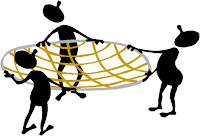 Health and social care are often couched in terms of being a safety net, especially in community care - this conception emphasizes health and social care as a physical resource. In the intra-interpersonal domain though we are concerned with individual mental life, beliefs, attitudes, thoughts and emotions....
So here it is as if we must adopt the philosophy of Bruce Lee and turn the 'art of fighting without fighting' into the 'art of caring without caring' through a momentary forgetting in order to care effectively. We suspend our thoughts - take a mental breath, bring our training and current evidence to the fore. The conceptual safety net does not work if it comes pre-filled with bias, prejudice, pre-conceived ideas and negative expectations. There is of course a very poignant irony in calling for people to forget, suspend belief - even for an instant - at this time and in this domain. For health and social care workers in wiping the slate clean we do not think, but are VERY receptive to what follows.
Image source: BBC
safety net: http://blogs.jamaicans.com/metinking/2009/04/30/a-jamaican-legacy-that-deserves-our-support/
Additional links: 'Poverty' on W2tQ
Political care (knowledge) domain links resource
COMMENT - 22 June 2009:
Would this article of mine along with its rapid responses add to your discussion?
http://www.bmj.com/cgi/content/citation/325/7354/51
http://ukpmc.ac.uk/articlerender.cgi?artid=478323 (full text)
Would you like to send me a book chapter on your experiences with the Hodges model in healthcare?
http://www.igi-global.com/requests/details.asp?ID=...
Regards,
Rakesh
Rakesh Biswas
Hello Rakesh,
Many thanks for your input and invitation. I don't think I could make the deadline for the book which is a pity, I've completed two book chapters for IGI thus far. The website is priority and Drupalcon Paris. I will think about this though and e-mail you soon - or please contact me directly at h2cmuk at yahoo.co.uk.
I've another three posts with this title. The post above rather grew to stand alone.
Anyway thanks again your input is most welcome and appreciated.
Regards
Peter
For decades the link between poverty and standards and quality of health has been recognised and politicised in the media and policy. Just this past week was news of a Bill to make the eradication of child poverty a legal obligation not something that can be the political objective at the start of a Government and then cast aside.
Many things are relative and poverty is often described in this way applying to individuals, social classes, communities, regions and whole nations. Using the knowledge domains of Hodges' model what reflections does this prompt? Let us see:
INTRAPERSONAL: On one level highlighting poverty here appears a nonsense as usually we think of material wealth; the ability of people to be able to put decent quality - nourishing food on the table. In the miserable trap that poverty presents, it is perverse to suggest that health and social care workers - indeed all 'customer facing personnel' seek poverty. But they should exercise: poverty of thought.
 Health and social care are often couched in terms of being a safety net, especially in community care - this conception emphasizes health and social care as a physical resource. In the intra-interpersonal domain though we are concerned with individual mental life, beliefs, attitudes, thoughts and emotions....
So here it is as if we must adopt the philosophy of Bruce Lee and turn the 'art of fighting without fighting' into the 'art of caring without caring' through a momentary forgetting in order to care effectively. We suspend our thoughts - take a mental breath, bring our training and current evidence to the fore. The conceptual safety net does not work if it comes pre-filled with bias, prejudice, pre-conceived ideas and negative expectations. There is of course a very poignant irony in calling for people to forget, suspend belief - even for an instant - at this time and in this domain. For health and social care workers in wiping the slate clean we do not think, but are VERY receptive to what follows.
This is where the wealth is:
between us.
between us.
We should not play the greedy capitalist and keep collaborative tools like Hodges' model to ourselves.
It was made to share: in my mind and yours a global health resource...
Image source: BBC
safety net: http://blogs.jamaicans.com/metinking/2009/04/30/a-jamaican-legacy-that-deserves-our-support/
Additional links: 'Poverty' on W2tQ
Political care (knowledge) domain links resource
COMMENT - 22 June 2009:
Would this article of mine along with its rapid responses add to your discussion?
http://www.bmj.com/cgi/content/citation/325/7354/51
http://ukpmc.ac.uk/articlerender.cgi?artid=478323 (full text)
Would you like to send me a book chapter on your experiences with the Hodges model in healthcare?
http://www.igi-global.com/requests/details.asp?ID=...
Regards,
Rakesh
Rakesh Biswas
Hello Rakesh,
Many thanks for your input and invitation. I don't think I could make the deadline for the book which is a pity, I've completed two book chapters for IGI thus far. The website is priority and Drupalcon Paris. I will think about this though and e-mail you soon - or please contact me directly at h2cmuk at yahoo.co.uk.
I've another three posts with this title. The post above rather grew to stand alone.
Anyway thanks again your input is most welcome and appreciated.
Regards
Peter
Monday, June 15, 2009
DrupalCamp UK Manchester: education and a (virtual) website
DrupalCamp UK in Manchester this past weekend was a great success. The organisers, sponsors and hosts the BBC on Oxford Road did a magnificent job.
My course through the schedule found me attending:
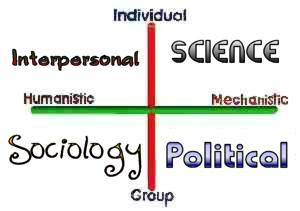 They began with Drupal being applied to education for brochureware (wish the new site was there!). This will be my starting point for Brian Hodges' old notes. These obviously need a place on the site, an archive where they are accessible next to new introductory material written to reflect:
Yes I know that is a broad agenda ('too much'), but this is about the learners, learning tools AND the models we teach being fit for purpose...?
Additional links:
Drupal.org
My review on W2tQ of Bill Fitzgerald's book 'Drupal for Education and E-Learning'
Drupal in Education - group
Nursing and Midwifery Council UK: Review of pre-registration nursing education
My course through the schedule found me attending:
- Installing and creating your first site
- Drupal for Education
- Drupal and Scrum
- Drupal Forms API
- Introduction to Organic Groups
- Creating your first module
- Using CCK and Views
- The Forms API - again
- Migrating data into Drupal
- Using Photoshop to theme a Drupal site
- Views handlers
 They began with Drupal being applied to education for brochureware (wish the new site was there!). This will be my starting point for Brian Hodges' old notes. These obviously need a place on the site, an archive where they are accessible next to new introductory material written to reflect:
health and social care, public (mental) health
informatics
education
socio-politics and the challenges of the 21st century
informatics
education
socio-politics and the challenges of the 21st century
Yes I know that is a broad agenda ('too much'), but this is about the learners, learning tools AND the models we teach being fit for purpose...?
Additional links:
Drupal.org
My review on W2tQ of Bill Fitzgerald's book 'Drupal for Education and E-Learning'
Drupal in Education - group
Nursing and Midwifery Council UK: Review of pre-registration nursing education
Monday, June 8, 2009
What wright to care?
 At senior school I had the challenge and pleasure of appearing in Arthur Miller's The Crucible at the age of 15. My part was of course that of Francis Nurse. I can still remember most of my lines [as I didn't have many ;-)]. I have always been interested in drama, but even more so - dialogue, which helps as a member of this family and a mental health care professional.
Over several years, the above plus studies in literature and philosophy prompted me to dabble with dialogues of my own. One from way back when concerned nurse training and virtual environments; while another was set in Athens addressing the impact of informatics upon nursing.
The professionals of dialogue - playwrights - feature on BBC R4 Start The Week and this made me think of another dialogue as I recognised that my colleagues and I are in fact carewrights.
 Now though with long term medical conditions, self-care, recovery, personalised care, individualised budgets and other policy permutations we are not just concerned with the words we say. With patients and carers seen and heard as experts no longer are we just putting words into their mouths - they are putting words in ours.
So together -
lets literally go taste the health and social care culture and break a leg!
Image sources:
book cover Amazon
Drama mask image: Saskatchewan Drama Association
Additional links:
Top 30 languages of the world
Top 20 countries by number of languages
International Mother Language Day 21 February
I note there are several instances of 'carewright' as a surname, trade / commercial name - my use and the context should be clear.
Saturday, May 30, 2009
Political shortsightedness and the power of nuclear weapons
The political expense debacle for ALL the main political parties* here in the UK and the consequences have numerously been described as 'fall-out'.
Although the lasting image is one of MPs staring into the headlights, there are many politicians who must be quietly pleased. When you listen to the leaders explain how the mess will be fixed, they appear to treat the expenses shinannighans as the problem that demands political reform. Once expenses are transparent and the public reassured then the problem is resolved and democracy will be strengthened.
As the political domain links at Hodges' model has attested for many years (and this resource merely scratches a personal political itch) politics covers rather more than 'expenses' and their governance. Long term calls for reform have included aspects of government and democracy beyond the clamour over the voting system. There is a need for global political reform and if this needs to start at a national level from the 'bottom' (literally in this case) -up then so be it. Ideally though political reform must happen in several quarters simultaneously. That is, socially, nationally and reform of the UN. This is happening and through the activism of various World Citizenry - Global Parliament initiatives that exist.
 A meeting of minds is not enough: there is a need for a meeting of global consciousness. On a more mundane level - for Westminster the politicians and voters must wake up and grasp the opportunity for wider political reform.
A nuclear blast gives rise to much more than expense laden fall-out.
What about:
*And a shot across the bows for all the others!
Hodges' model: POLITICAL domain resources
Although the lasting image is one of MPs staring into the headlights, there are many politicians who must be quietly pleased. When you listen to the leaders explain how the mess will be fixed, they appear to treat the expenses shinannighans as the problem that demands political reform. Once expenses are transparent and the public reassured then the problem is resolved and democracy will be strengthened.
As the political domain links at Hodges' model has attested for many years (and this resource merely scratches a personal political itch) politics covers rather more than 'expenses' and their governance. Long term calls for reform have included aspects of government and democracy beyond the clamour over the voting system. There is a need for global political reform and if this needs to start at a national level from the 'bottom' (literally in this case) -up then so be it. Ideally though political reform must happen in several quarters simultaneously. That is, socially, nationally and reform of the UN. This is happening and through the activism of various World Citizenry - Global Parliament initiatives that exist.
 A meeting of minds is not enough: there is a need for a meeting of global consciousness. On a more mundane level - for Westminster the politicians and voters must wake up and grasp the opportunity for wider political reform.
A nuclear blast gives rise to much more than expense laden fall-out.
What about:
- Overpressure
- Electromagnetic pulse
- ....?
*And a shot across the bows for all the others!
Hodges' model: POLITICAL domain resources
Sunday, January 4, 2009
State of Mind "Total Institution" 07 Jan 2009, 21:00 BBC Radio 4
State of Mind "Total Institution" 07 Jan 2009, 21:00 on BBC Radio 4
Synopsis: Claudia Hammond tells the story of mental health care in the UK from the 1950s to the present day and explores, with the help of listeners' testimonies, how treatment and understanding of mental illness has changed over the past 50 years. The 1950s promised a new deal for the mentally ill, with new drugs and radical legislation. Psychiatrists believed they had the answers, yet seclusion in asylums continued.
Synopsis: Claudia Hammond tells the story of mental health care in the UK from the 1950s to the present day and explores, with the help of listeners' testimonies, how treatment and understanding of mental illness has changed over the past 50 years. The 1950s promised a new deal for the mentally ill, with new drugs and radical legislation. Psychiatrists believed they had the answers, yet seclusion in asylums continued.
Thursday, September 11, 2008
BBC R4 Today - NHS productivity
Following the post yesterday - Don't waste energy - use a care plugin... - there was an item this morning on BBC R4 Today:
Martin Weale highlighted how efficiency is not everything - people may have other requirements. If a patient is treated very efficiently and quickly - all evidence based, latest and greatest interventions - but their experience is at best neutral, or at worst negative, then how will that experience affect their recovery, staying well - relapse prevention - and any future care episodes and admissions? Complex indeed ...
- and Remembering...
0815There's no transcript of the interview so maybe I was (still) dreaming? At some stage though this a.m. a point was also made about the public (as tax payers and patients) either wanting to go into hospital to be treated and cured (quickly and efficiently) OR have a 'good' (positive) patient experience.
A report published by the Office for National Statistics suggests that NHS productivity has been falling by 2% a year. Martin Weale of the National Institute of Social and Economic Research, and Shadow Health Secretary Andrew Lansley discuss the efficiency of the NHS.
Why can't the two go hand-in-hand -
especially with all the emphasis on 'partnerships'?
especially with all the emphasis on 'partnerships'?
Martin Weale highlighted how efficiency is not everything - people may have other requirements. If a patient is treated very efficiently and quickly - all evidence based, latest and greatest interventions - but their experience is at best neutral, or at worst negative, then how will that experience affect their recovery, staying well - relapse prevention - and any future care episodes and admissions? Complex indeed ...
- and Remembering...
Subscribe to:
Posts (Atom)