Showing posts with label person-centred. Show all posts

Thursday, March 10, 2011

Person centred care, wormholes, pesterers and care domains (ii)

Person centred care, wormholes, pesterers and care domains (i)

Mentor: Sorry my friend where were we up to?

Student: I am still puzzled as to how we can define and represent person centered care? Where does person centered care fit in h2cm (Hodges' health career model)?

The INDIVIDUAL-GROUP vertical axis places the person, the individual - at the top of the model. That could be a positive if we are thinking hierarchically, but shouldn't a model that is situated AND person centred be explicit and put the person at the center?

Mentor: This is a good question and you are right to ask it. As our previous discussions have illustrated our models are idealised and yet they should reflect the real world and experiences they seek to model and re-present for us:

Student: but in this case....?

Mentor: Well, not so quick...

As we noted the World's governments get the citizenry they deserve and vice-versa. If peace, political engagement, legitimate government and contentment are not a given but have to be earned then is person centred care any different?

Student: So, you are saying that peace, being a citizen, and mm... well-being I suppose are in a sense similar to person centered care?

Mentor: Perhaps?

Student: That seems quite a leap.

Mentor: Well your question prompts exercise - a certain gymnastics even - and with that a daily requirement we'll save this point for another time.

For now though... I know we don't necessarily need a precise definition of person centered care at the moment, but humour me and see what you can come up with in terms of this model of care. As you have mentioned it includes the INDIVIDUAL, the GROUP. And with the interpersonal and science domains the person's mind and body are literally in the frame.

Student: Well unless we are talking medical emergency then person centered care is about ensuring the individual is taken into account across all the domains of care.

That is - intra-interpersonal, physically - through the sciences, socially and politically. 
Oh - and spiritually too of course.

Mentor: So person centered or being person centered concerns domains of care?

Student: No. It's the content that matters. Take the interpersonal and myself as an example - what are my beliefs, previous experiences, writing skills and interests, my mood, disposition and attitude towards others. That only scratches the surface.

Mentor: I see. Can you go on from there...?

Student: Well I suppose each domain is visited according to various cues - and this is where context and situation come in. These supply the cues. They determine what is significant, what counts as information. For experienced nurses and health care practitioners this travel within and across the care domains comes as second nature.

Mm... I suspect that even if someone was not using h2cm explicitly their cognitive - conceptual movement could still be traced through the model, like passes on a football pitch.

Mentor: Very poetic! So if these care domains are being reflected upon does that mean person centered care is a consequence?

Student: Well I suppose it could if you take your mention of 'reflection' literally. Yes, picture the patient - the person - in the center of the h2cm matrix. We might even argue that our reflections place them there? Within the model what is the position of the person? If our deliberations could be measured - and practically that would be quite a task given patient engagement and dialogue - then is there an average across the domains? And is that the center - hence person centered?

Mentor: An interesting idea. And yet as you questioned initially the INDIVIDUAL in the model is at the top, at the top of an irregular continuum, so...?

Monday, January 31, 2011

Dementia care: communication in nursing homes

In nursing home liaison the importance of communication quickly asserts itself (as it does throughout health and social care). As an organisation effective communication is evident (or should be) at all levels:
  • Corporate: across the 'group'
  • Management: within the home
  • Clinical: continuity of care between shifts, days - nights
  • Care staff and residents - especially those with challenging behaviour
  • The care home (staff), relatives and community
This week and as also recognised for colleagues in the future, my role will focus on education. In particular reviewing the background, theory and practice of communication with people who are more severely disabled by this condition. I've sixteen slides as a guide, a lesson plan but I will be using a flipchart (arriving early to scribble away) with the intent to engage the audience. Given my pre-occupation with information I want to mix and match as follows:
  1. Use information as a central concept, not technically but personally as per self-awareness, knowledge and orientation, person-centred care.
  2. Have people contemplate communication in a practical sense.
  3. Finally, obviously ensure that what is discussed and shared is directly related to their work, the care needs and challenges of the residents (and families?).
On the information front I'm sure I can employ the conventional and simplified communication model:

SENDER - channel - RECEIVER

This may appear mechanistic but it's an effective way to highlight the real difference that Health Care Support Workers - and indeed family and friends can make to resident's lives. Referring to this model I can demonstrate the very upsetting inequalities that are often found here. The audience can contrast themselves as SENDER and RECEIVER with each other and in care scenarios.

We will identify and acknowledge the deficits that people living with dementia must contend with and endure. This is to review previous learning and ensure staff fully appreciate the care situation. More positively the session will stress the role of staff as builders and agents of personalised care with a great contribution to make.
  1. They can consider (critically) the care environment - yes the 'home' - as the source of potential noise. 
  2. When there is an imbalance in the capabilities, comprehension and meaning between SENDER and RECEIVER skilled, insightful, and patient staff can compensate, addressing the person's unique needs.

If there are matters that cannot be resolved then these 'risks to person-centred care' should be carried forward to management: a prescription that must be repeated as necessary. With the purported high rate of staff turnover in homes (is that a myth - what are the figures really?) they should be able to leverage these FFIs - frequent first impressions - from new staff, before they are also part of the furniture.

Allied with this is a request for support in person-centred care. For me these two go together and it's good that this 2nd session follows tomorrow. This is an opportunity to introduce the Health Care Domains Model and build upon the points raised and factor in the questions and issues raised by the staff.

Critically across all these layers of comms is: Leadership. A key part of that of course is recognising training needs and pursuing change.

Thursday, January 27, 2011

Proximity: Relationships, Records, e-Health - Person-centredness near and far

When data protection and confidentiality is debated "the need to know" is often wheeled out as a rationale for access to personal identifiable data.

See the following:
NHS Confidentiality Consultation - FIPR Response (esp. #18).
DoH, Confidentiality, UK

In addition, if I need to access the record of patient held at hospital 'x' from hospital 'y' what is the health care relationship that prompts and justifies this need?

At present visiting nursing and care homes, you go knowing that data capture and recording (care assessment) is a fundamental requirement. Having a secure laptop for community has long been promised. While tech solutions are available and implemented elsewhere, my lack of such technology prompts me to imagine a future visit. ...

Pulling up at the nursing home I walk up the drive, ring the bell. While I wait the new tablet device in its bag has already introduced itself to the home. As I am allowed in - my identity assured - the tablet continues its dialogue, it:
  1. Downloads and updates existing active client data.
  2. Downloads additional data as per the agreed dataset on the new referral.
  3. Checks on items 1-2 with a review of recent prescribing for key psychotropic medicines.
  4. It checks the most recent NICE, Cochrane evidence and reconciling the local care knowledge. (This may seem excessive at present, but come personalised medicine this will be crucial).
  5. Will check on most recent clinical reviews and due dates.
  6. The h2cm template is there ;-) ready to present the care domain summary for the general physician ... and possibly (roles?) the next care professional to visit this home and this resident.
The significance of relationships is usually denoted by distance. Personal space is rather obviously spatial. This is how we recognise (well one of the ways!) the meaning and significance of an intimate relationship. In care situations with individuals who are confused and potentially aggressive we are conscious of the need to have due regard and respect for that person's personal space. Spaces and boundaries have to be negotiated in a variety of ways and means. 

Health information technology has already made effective use of role-based access to systems. If we take person-centred care to the nth degree, proximity can also count as it does in mobile health (m-health). Whilst to effect a role is to be in a certain location and context (sat at the office PC in the hospital) roles are organisationally and politically defined. Proximity is also contextual and situated in other ways, my proximity to:
  • the nursing home;
  • the individual's room;
  • the individual themselves.
  • (and their relatives)
While telecare / informatics can deliver a dividend in remote care, it is essential that it can also demonstrably support person-centred care. The best way (clinically assured) to do that for many activities is person-to-person contact. Just because one-side of the relationship may not recall the encounter as little as five minutes after, does not mean that there is no value in sustaining the ring of the bell, the exchange of s-miles, the record that results and other background conversations.

Image source:
Gestalt - proximity
http://graphicdesign.spokanefalls.edu/tutorials/process/gestaltprinciples/gestaltprinc.htm

Wednesday, December 29, 2010

Musings... axes in hand and mind

...

Axes in hand and mind
[Accounting for the I-G (individual-group) axis and the need for the H-M axis]

Clearly there is a need for a basic scaffold. One that reflects the real world and the real time to which we are all exposed and are a part; and one that can also represent the model(s) we wish to create - the products of our health care, nursing activities. The scaffold we build must be one on which we can hang concepts and for simplicities sake human (care) concerns. Specifically a conceptual scaffold and a human scaffold. The latter can be represented simply as a continuum from INDIVIDUAL to GROUP, hereafter referred to as I-G.

The other, the conceptual scaffold, calls for what might be termed conceptual inflation. If we imagine the I-G as the vertical challenge (remember the health & safety issue!) and draw with the 'individual' at the top, then there is much we can model based on this basic dichotomy. This is too simple however. We cannot capture the part of the rich tapestry that is life - well-being, health - and death. For this another axis is needed.

(Which begs me to ask myself:
is there a law that suggests that one axis however oriented invites another?)

With this further partition and heralding of a further dichotomy what is lost? What is gained, if anything? In scribing this first line we explicitly separate the 'one' - the self from the other. The addition of another axis is where and how we define a center. With this center and from it we can find the energy to fuel our conceptual inflation. We literally draw out the foundation by considering what these persons do? ...

Conceptual inflation: Four-fold nursing agnostics
...
PJ Dec 2010

Monday, December 27, 2010

Musings... building models, health & safety, group and individual

....

Basic foundations and minimal defaults
[Accounting for the I-G (individual-group) axis]

Since nurses and technologists are concerned with communication then the foundation from which they begin to (build and model their) work is of fundamental importance. The foundation needs to be generic in the first instance. Generic in the sense of the commonality that language instills, enables and facilitates within and between communities. Not only that, but if we take the property of 'generic' to its extreme then the foundation must be stripped down to the barest of defaults: there are no 'types'.

To use the safety analogy we need to risk assess the extent of our model building activities.

We can do this by asking: is this a one, or at most two dimensional venture; such that we can rest secure on terra firma? Or are we above 'ground' floor and immediately required to address health and safety legislation?

Since medicine and nursing are concerned with - must be evidence based - there is an immediate  vertical challenge in the hierarchies inherent in the sciences and the structure of knowledge.

Science is not the only influence here. The foundation of what we are modelling and building must reflect the ultimate subjects (the person - patients, carers, communities, whole populations) of our activities. So, the individual (whose very safety is our concern!) must be factored in and with this concept the notion of human rights. While a dialogue of no trivial nature in itself, suffice here to suggest that individual and applied human rights emerges out of and is dependent upon the collective (group). This in turn is a measure of the level of social coherence, coherence through a level of social and political organisation that allows leaders to effect positive change and betterment. The person, the individual is built not upon the shoulders of giants, but ordinary people - our ancestors and peers. ...

Axes in hand and mind
...
PJ Dec 2010

Thursday, December 9, 2010

Recipe II: Holistic care - Care pebble overhere!

...

WouldBeUser: Well there's no shortage of pebbles, the referrals come thick and fast.

ActualUser: That's why reflecting on that particular pebble is important, turning it - them, their situation over. Asking yourself is there anything I and the team have missed?

WouldBeUser: OK, the beach is still full of them!

ActualUser: Is it the pebble you are trying to see?

WouldBeUser: Ah, of course! Individualised care?

ActualUser: That's right. Nursing, health, social care and in fact good governance everywhere is about seeing the person. Sometimes it isn't easy; but if you pick that person out then you can count the rewards as you would the pebbles on the beach ...

Original image sources - see Recipe I

Friday, November 12, 2010

Comets, holistic care and peripheral vision


Comet Hartley 2 is still bright and yet throughout its visit by Earth quite diffuse, so I have yet to try to find it with my binoculars. To effectively use binoculars, a telescope (or even a microscope) and enjoy the astronomical delights (especially as Councils save money and switch off street lights) it helps to develop your peripheral vision.


Nursing, medicine and social care calls for its own kind of peripheral vision. Peripheral vision that nonetheless enables us to really see. It is ironic that in order to see the big picture that includes the person, that allows us to coherently assess, plan, deliver and evaluate person-centred care we must look off-center.


Comet image source: http://maineastro.com/2010/10/binocular-comet-now-high-in-the-sky/

Tuesday, August 31, 2010

Ru! Ru! Ru! Ru! ..... alarmed by the noise? [ambient care]

Working in nursing home liaison I am a regular visitor to various homes in my patch.

As I respond to referrals inevitably I spend several minutes waiting to see residents, relatives and staff. At this point I can take in the ambience of the home and all too frequently what stands out is the home's call system.

Many are acutely effective.

Even though I am not there for long - 30-60 minutes, the volume, tone and the overall quality of some of these systems can be grossly irritating. Due to the care needs of the resident population the alarm calls are also a constant. This is not just my audiological experience, but one shared with students on placement with me.

Attracting the attention of staff is crucial. Caring staff do want to know who, where and when someone needs assistance. Ironically, sometimes that annoying, intrusive alarm call is supported with a plaintive shout for "someone!". As ever there are many ways to define person centred care. In response to the alarm's screech, scream and shrill the staff head to the panel and seek direction to Room 3 or 7.

If care is personalised then whatever happened to our signature tunes? Did this individual play a musical instrument? Gleaned from their life history record this might at least include Jo's musical favourites? It's true that existing alarms are anonymous, and so confidentiality is preserved. Meanwhile though peace, well-being and staff retention rates(?) are lined up against the walls and reverberated, rev erbe rat ed, re ve r be ra te d ... ...

Of course, at some remote future time I might embarrass myself as I press the red button and the Thunderbirds March rings out down the corridor, around a left, a right corner to light a panel.

Fellow residents and visitors might be given to say "Gee, there goes Alan Tracy needing help again!" Maybe by then the robots will have it sorted: the latest in-situ care units will save the day and people's ears.

Seriously though: designers, owners and managers of homes must consider the acoustic architecture of the care environment; or are they also anticipating a rise in the average age of employees with a consequent impact on the hearing acuity of employees? As to the quality of life of the residents go figure: 5, 4, 3, 2, 1!

Sunday, August 22, 2010

Concept albums and voice signatures

In .net magazine (Sept 2010, p.42) Jeffrey Zeldman makes reference to the web we grew up with being as obsolete as concept albums. It's true that music distribution has suffered a series of step-downs from the format that previously conveyed the concept album visually. Many LP covers are classics in themselves. The switch from LP record covers, to CD, and then to mp3 ... downloads means concept albums are indeed fewer; but maybe the reduced visual impact means that new concept albums are less noticed too?

Could the concept album experience a renaissance: online? Story telling has never been completely lost. The web and world's media depends on content: the appetite for stories and music is voracious - Hollywood is famished. Successful narratives prove their worth by doing surprising things with concepts that prompt re-telling down the ages. The concepts may change, but the structures and elements of the stories are timeless.

Concepts obviously remain central to making sense of everything: self, others, the world and the future that includes the new web. In the health career model we have a concept album. It is a care concept album comprising several snapshots or frames. It is also person-centred.

It has a voice that has its own musical signature, it is unique - that is if the album is truly person-centred and listened to.

.net September also includes a brief interview with the creators of The Specials website, which takes the form of a docu-soap about five friends with learning disabilities.

When we listen stories can be told:
great things can follow.

Sunday, July 4, 2010

The cost of anholistic care

Being 'holistic' in care delivery can seem anachronistic, paying homage to new age thinking and practices. Paradoxically, being holistic in nursing can also mimic an admin exercise that amounts to ticking the boxes. So for Hodges' model - have you visited all the care domains?
  • INTERPERSONAL care ✓
  • POLITICAL care ✓
  • PHYSICAL care ✓
  • SOCIAL care ✓
Advanced discharge planning is many things:
  • idealised care;
  • standardised care;
  • evidence of policy, targets;
  • sign posting for the care pathway;
  • an essential care aspiration that emphasizes the individual's strengths and resources.
As Wimbledon once again reaches its climax we observe that a fast serve needs to be prepared for a fast return of serve.

Last month 23 June, 2010 The Guardian, Society Guardian featured The high cost of return:
Hospitals could lose up to £1.5bn of NHS funding a year because of the government's decision to penalise those where patients return within 30 days of being treated. That is the conclusion of research conducted by health analysts Dr Foster into the potential impact of the tough new policy. It warns that NHS trusts face large potential losses, the biggest could reach £28.7m, as a result of the new approach. In all, 146 acute, specialist and mental health trusts could lose out. Denis Campbell, p.3.
Apparently -
Andrew Lansley wants to force the NHS to provide better care in hospitals and mental health establishments, to keep treating patients there until they are fit to leave and to work more closely with community-based healthcare professionals, such as GPs and district nurses, to ensure sick people receive more help with their convalescence after discharge and so are less likely to return to hospital. "Making hospitals responsible for a patient's ongoing care after discharge will create more joined-up working between hospitals and community services and may be supported by the developments in re-ablement and post-discharge support," he says.
I hope in reading the above you have a sense of my frustration in that the health career model can encourage and support timely reflection that can help achieve holistic, integrated - coherent care.

If the model was shared
- a common resource -
across disciplines and available to patients and carers
then the potential benefits (and savings?) are even greater.

Saturday, June 26, 2010

Nursing attitudes [towards patients ( and self { and ? } ) ]

In the past half-year there have been two discussions, that concern the nurse's attitude towards patients.

One was held on the nursing philosophy list in February:

https://www.jiscmail.ac.uk/cgi-bin/webadmin?A0=NURSE-PHILOSOPHY

"The patient is always right"

The other in May was on the mental health in higher education list:


"Insufferable' or 'Suffering' - a response"

Both provoked a similar response and debate. I have just reprised my post in February on the MHHE list and have copied it - with some revision - below:
<->

Patients are always a challenge in that they come in lots of 'varieties'.

This is why we recognise the need for individualised, person-centred care. One variety is trauma laden to which the full-complement of the multidisciplinary team must respond. These patients and *their* crises bring out the best in us in terms of the skills and knowledge, team work they force us to exercise.

Among the plethora of other varieties there are those who are viewed as 'problems'. Like the Pepsi ad of decades ago they are variously and pejoratively described as multiple attending, attention seeking, patience sapping, heart-sinking, time wasting, symptom preoccupied .... patients.

If I receive referral information, or heads up information on diagnosis that suggests the above what do I do?
  • Brace myself for impact?
  • Become task focused?
  • Share collective anecdotes in the staff room as a way to cope, unstress, inject some humour?
OR -
  • Avoid labelling them or use these labels in a re-constructive way?
  • Refuse to make gross assumptions
  • Look at the individual non-judgmentally, holistically, educationally, behaviourally
  • Believe I can make a difference (change is always possible [inevitable] )
  • Side-step being tripped by foibles, behaviours and blatant displays of -ve obstructive ... attitudes that offend 'me'
  • Enter their space and do my utmost to find room for manoeuvre?
  • As a nurse do go and seek out strengths and opportunities in the same way that Capt Kirk et al. go and seek New Life, New Civilizations..?
You may have an impossible lock to pick. In its most severe form this is (pejoratively) known as 'personality disorder', but the nursing challenge is there in all its personal and professional glory.

So. Listen.
Attend to this personal
/ under-the-skin \
slant.
Listen and Learn.

Be aware of the pit that continues to trap many people. The life chances - the health career - that they may have missed, took for granted, spurned and much more you (we) will never know about.

Do your job: nurse.

Sunday, May 9, 2010

International Journal of User Driven Healthcare (IJUDH) CfP

Dear Mr. Jones

In view of your work in patient-centered care, I’d like to invite you and/or your colleagues to submit a paper to this Special Issue of the new journal described further below and via the web link provided. I think our global readers would be very interested in your thoughts (and projects) on innovative ways to get relevant healthcare information into the hands of ‘users’ (both patients and providers), within the user-driven EBM paradigm, per below.

Please also share this call for papers with your colleagues.

Thanks for your consideration,

Susan Ross, MD


International Journal of User Driven Healthcare (IJUDH) Call for Papers

Editor-in-Chief:
Rakesh Biswas,
Center for Scientific Research and Development (CSRD),
PCMS Campus, India

Published: Quarterly

Call for Papers - Special Issue:

Submission Due Date: July 1, 2010
Special Issue On User Driven Healthcare and Evidence-based Medicine


Guest Editors:
Susan Ross, MD, FRCPC


Introduction

User Driven Healthcare (UDH) is part consumer-driven healthcare, part narrative medicine, and part Health 2.0. It stems from a concept of participatory healthcare whereby all stakeholders, enabled by information, software, and cyber-community, focus on healthcare value. But where does Evidence-based Medicine (EBM) fit into this framework? It is sometimes forgotten that EBM is a three-legged stool, comprised of the triad of evidence +provider expertise + patient preferences. In this EBM framework, provider expertise is needed to bridge the inferential gap between population-based evidence and the individual patient. And each patient's values and preferences should narrow that inferential gap further. But since the introduction of EBM nearly two decades ago, the primary focus of EBM proponents has been on Evidence, at the expense of patient preferences and provider expertise. Perhaps this is why the promise of EBM to foster the most efficient and high quality healthcare has not yet been realized.

Objective of the Special Issue

This Special Issue will focus on the following questions: Is the recent emergence of User Driven Healthcare really a new, post-EBM paradigm for healthcare, or just an overdue consideration of the other two legs of the original EBM stool? How might this trend affect all stakeholders?

Recommended Topics

Topics to be discussed in this special issue include (but are not limited to) the following:
  • Developing valid patient-level evidence using the Web
  • Evidence generation—clinical research strategies using social media and mobile technologies
  • Examples of UDH to a) help formulate the right questions to ask in EBM; b) develop answers to those questions; c) disseminate the answers to patients and providers with a need to know; and d) test the impact of UDH-generated Evidence on patient outcomes
  • Helping online patients sift the ‘wheat’ from the ‘chaff’—information management for patients in an EBM world
  • How to incorporate patient preferences and values into ambulatory care decision-making (i.e., into the 10 minute visit)
  • Measuring the impact of UDH on patient outcomes
  • Patient-level decisions vs. population-level evidence (bridging the inferential gap)
  • Pharmaceutical communication strategies using social media—impact on healthcare quality and costs in an EBM framework
  • Place of social media in EBM—patient and physician online communities
  • Practice of UDH vs. EBM around the world
  • Regulatory issues of evidence dissemination by industry using social media in healthcare Statistical and other evaluative methods to assess the validity and reliability of evidence developed using social media and mobile technologies
  • Trends in N-of-1 studies, and their relevance to EBM and UDH
  • Use of collective intelligence to solve healthcare problems for individuals and communities
Submission

Researchers and practitioners are invited to submit papers for this special theme issue on User Driven Healthcare and Evidence-based Medicine on or before July 1, 2010. Submissions received after this date will be reviewed for possible publication in subsequent issues of the journal. All submissions must be original and may not be under review by another publication. INTERESTED AUTHORS SHOULD CONSULT THE JOURNAL’S GUIDELINES FOR MANUSCRIPT SUBMISSIONS at http://www.igi-global.com/development/author_info/guide.asp. All submitted papers will be reviewed on a double-blind, peer review basis. Papers must follow APA style for reference citations.

All submissions and inquiries should be directed to the attention of:

Susan Ross, MD
Guest Editor
Email:sdross720@gmail.com

Friday, May 7, 2010

Comment: session at Beyond These Walls - Public Engagement Colloquium

I am of course really pleased that Prof. George Kernohan employed h2cm in his presentation last month - Beyond These Walls - Public Engagement Colloquium which I posted on W2tQ.

Considering his abstract I have added some observations below that I hope will further highlight the model's potential utility in this and other areas.

To begin George is quite right to describe the model as -
'a relatively simple way to think about and summarise the variety of engagement types.'
This explains the model's use as a student resource, a foundational framework on which to superimpose their learning and map placement and professional development experiences. As a learning activity reflection is greatly concerned with the student's accounts of engagement with patients, colleagues, carers and the public at large. This also flags up the belief that the model has some generic educational purposes in health and beyond with patients, carers and the public.

The model should not however be restricted to simple representations and applications. Granted the safety, efficacy and value of the model remain to be proven, but hopefully the directions indicated here on W2tQ and in publications to date are worthy of further exploration? More complex - lifelong learning - uses of the model might include:
  • case formulation
  • psychological therapy formulation (CBT, family)
  • self-directed care planning and budgeting (sign-posting)
  • complex systems in health care
  • policy and politics in health care
  • reflection: students, client life story work
  • integrating care recording
  • and clearly public engagment in many contexts; research, management and service development.
I am adding my (italicised) comments to Prof. Kernohan's original abstract below:
The first quadrant [SCIENCES] deals with scientific response to individual signs and symptoms: where engagement aims to ensure that people comply with the healthcare intervention: engagement is about informing the patient and their informal carer about their physical needs and responses.
People comply when they understand treatments and this understanding needs to be demonstrated. There has been much emphasis on concordance, but this has to be earned as Prof. K. indicates.
The second quadrant [POLITICAL] deals with mechanistic and group activity: for example political interventions to agree rules, policy and systems. Engagement here refers to members of groups working under a specific governance system or approach– activists and unions lobby for change, in this care domain. Arrangements for protection of vulnerable people are set through engagement here. Ethical issues guide the group mechanistic activities.
The past couple of years has seen a whole new group of people acting in this domain. The Mental Capacity Act has resulted in various protections for individuals who are assessed as lacking mental capacity. Whilst this is quite specialist and the province of secondary care and social services, the public will increasingly be exposed to vulnerable adults in their community, on their street. (I saw a gent walk past last night - to be collected by a care worker and taken back to the near-by care home. There was some resistance as they reached the corner. Deprivation of liberty and best interest sprang to mind. ...)

There are numerous other examples: membership of the public in Foundation Trusts, consultation processes on service locations, the provision of information resources for the public.

Another critical policy factor here is QUALITY, how this is measured and the public engaged in those measures and their EVALUATION.

A hybrid approach WILL be needed. A single measure is insufficient and within h2cm inevitably skewed.

Thirdly [SOCIOLOGY], there are more humanistic aspects of care: speech, thought, narrative and free text: stories contribute to group actions. Here we have the social and cultural components to remind us that engagement must work in a social context.

I tend to ground speech and thought in the interpersonal domain (related to cognition) as the primary focus of nursing (health and social care) is the individual. Although communication (society) is impossible without thought and speech and there is a special link here in that the individual cannot acquire appropriate thought and speech without being socialised.

Stories have a definite home in this care domain. Stories are the foundation of what people share, who we are, heritage. Stories differentiate familiars and strangers - stories old and new. Narrative medicine is here, right now. Significantly, the rise of science is in diagonal opposition to the domain of stories.
The final domain [INTER-intraPERSONAL] emphasizes the role of the individual in needing tailor-made care, requiring dignity and respect. Here lies a more holistic type of care and is more ‘mind’ than ‘body’ where interpersonal aspects of engagement are more person-centred.
This domain and the proximity of the 'individual' axis is the focus of nursing care. The rationale for individualised, personalised, person-centred, client-centred care is found here. We need to cross the individual axis repeatedly in order to achieve holistic care. There is no single destination. This journey is never a 'single' in two senses: neither one-way, nor travelled alone hence George's objective in public engagement.
Across all four care domains, public engagement is a key sustaining action to make the model meaningful but also to provide some reassurance that engagement although complex and varied, can be managed in a logical way to enhance care.
I can see what George means by stating that engagement can be managed in a logical way.

Logic's extent varies across the care domains of Hodges' model; from the logical affirmation and assurance that underpins evidence based interventions to the decision algorithms that inform NHS Direct. There is also a need for recourse to several forms of logic as the model is traversed and negotiated. Folk theory, dreams, the chaos of elections and economic uncertainty, and the public's sense of demographic trends also have their place.

I understand that Prof. Kernohan's slides will be posted on the event website in due course.

Many thanks to Professor Kernohan for his recognition and publicizing of the health career model.

Image source:
Gogeometry.com - http://www.gogeometry.com/problem/p076_square_circle_area.htm

Tuesday, May 4, 2010

Hodges' model: subject of a session at Beyond These Walls - Public Engagement Colloquium

Hodges' model found a place in a session at:

Beyond These Walls - Public Engagement Colloquium
Faculty of Life and Health Sciences
22nd April 2010 at the Ross Park Hotel, Kells


Theoretical review of public engagement in Nursing: Abstract

by George Kernohan, Professor of Health Research Nursing, University of Ulster

Nursing & health professional have wide roles in care of people in need, in sickness and in health and in supporting their informal carers. These roles, by necessity involve people in various ways: in this paper Hodges Health Career Model (Jones, 2009) is used to provide a framework to underpin public engagement in nursing. The model provides a relatively simple way to think about and summarise the variety of engagement types. It comprises two lines and eight words which appear to provide a graph with two axes. The vertical axis involves the recipients of care: individuals and groups, the other involves the care provider and what they do: from mechanistic to humanistic.

The first quadrant [SCIENCES] deals with scientific response to individual signs and symptoms: where engagement aims to ensure that people comply with the healthcare intervention: engagement is about informing the patient and their informal carer about their physical needs and responses.

The second quadrant [POLITICAL] deals with mechanistic and group activity: for example political interventions to agree rules, policy and systems. Engagement here refers to members of groups working under a specific governance system or approach– activists and unions lobby for change, in this care domain. Arrangements for protection of vulnerable people are set through engagement here. Ethical issues guide the group mechanistic activities.

Thirdly [SOCIOLOGY], there are more humanistic aspects of care: speech, thought, narrative and free text: stories contribute to group actions. Here we have the social and cultural components to remind us that engagement must work in a social context.

The final domain [INTER-intraPERSONAL] emphasises the role of the individual in needing tailor-made care, requiring dignity and respect. Here lies a more holistic type of care and is more ‘mind’ than ‘body’ where interpersonal aspects of engagement are more person-centred.

Across all four care domains, public engagement is a key sustaining action to make the model meaningful but also to provide some reassurance that engagement although complex and varied, can be managed in a logical way to enhance care.

Jones, P. Hodges Health Career - Care Domains – Model. 2009.
http://www.p-jones.demon.co.uk/ accessed 25/03/2010

Chambers, R. Involving Patients and the Public. How to do it better. 2000. Radcliffe, Oxon

Related links:

Kernohan, G. Theoretical review of public engagement in Nursing. Proc 1st Public Engagement Colloquium, Kells, Co Antrim, 22 April.
http://www.ulster.ac.uk/scienceinsociety/beyondthesewalls.pdf

Science in Society

Saturday, March 20, 2010

More SF (speculations on person-centred care...?)

I've been reading a bit more SF - this time Joe Haldeman's, The Forever War here's a fascinating excerpt:
I went to the phone in the kitchen and with some difficulty managed to get through to the hospital. A plain girl in her twenties formed in the cube. "Nurse Donalson, general services." She had a fixed smile, professional sincerity. But then everybody smiled.
"My mother needs to be looked at by a doctor. She has a --"
"Name and number, please."
"Beth Mandella." I spelled it.
"What number?"
"Medical services number, of course," she smiled.
I called into Mom and asked her what her number was.
"She says she can't remember."
"That's alright, sir, I'm sure I can find her records."
She turned her smile to a keyboard beside her and punched out a code.
"Beth Mandella?" she said, her smile turning quizzical.
"You're her son? She must be in her eighties."
"Please. It's a long story. She really has to see a doctor."
"Is this some kind of joke?"
"What do you mean?" Strangled coughing from the other room, the worse yet. "Really -- this might be very serious, you've got to--"
"But sir, Mrs. Mandella got a zero priority rating way back in 2010. "
"What the hell is that supposed to mean?"
"S-i-r . . ." The smile was hardening in place.
"Look. Pretend I come from another planet. What is a 'zero priority rating'?"
"Another -- oh I know you!" She looked off to the left.
"Sonya -- come over here a second. You'd never guess who .." Another face crowded the cube, a vapid blonde girl who smile was twin to the other nurse's. "Remember? On the stat this morning?"
"Oh, yeah," she said. "One of the soldiers -- hey, that's really max, really max." The head withdrew.
"Oh, Mr Mandella," she said, effusive. "No wonder you're confused. It's really very simple."
"Well?"
"It's part of the Universal Medical Security System. Everybody gets a rating on their seventieth birthday. It comes in automatically from Geneva."
"What does it rate? What does it mean?" But the ugly truth was obvious.
"Well, it tells how important a person is and what level of treatment he's allowed. Class three is the same as anybody else's; class two is the same except for certain life-extending--"
"And class zero is no treatment at all."
"That's correct, Mr Mandella." And in her smile was not a glimmer of pity or understanding.
"Thank you." I disconnected. Marygay was standing behind me, crying soundlessly with her mouth wide open. ...

Joe Haldeman, The Forever War, Gollancz, SF Masterworks, pp.148-149.
Link:
http://en.wikipedia.org/wiki/The_Forever_War

Sunday, March 14, 2010

RCN member's survey on spirituality & H2CM

Originally published - 10 March 2010
Source: http://www.rcn.org.uk/newsevents/news/article/uk/rcn_seeks_members_views_on_spirituality

The Royal College of Nursing has launched a survey to improve its understanding of nurses’ views on spirituality.

RCN members are invited to submit their thoughts on what they understand by the concepts of spirituality and spiritual care and whether they consider these to be legitimate areas of nursing practice. Specific questions will ask what level of training and support should be given to nurses to deal with spiritual issues.

RCN Executive Director of Nursing and Service Delivery Janet Davies says:

“The RCN is committed to the promotion of holistic care*, but we recognise that spirituality is a complex area. Although understood as an area of human life that applies to all, spirituality can also be subject to taboo and misunderstanding. We are committed to understanding nurses’ views on spirituality and to explore this issue further.”

The results of the survey will shape the RCN’s work in this area and will be presented at a fringe event at RCN Congress in April.

RCN members: Complete the spirituality survey by 31 March 2010.

* My emphasis.

Thoughts from Hodges' model (PJ):

Nurses most definitely need to be aware of and have due regard to care management theory and practice associated with spirituality. That is - how individuals, families, communities (and the State) express belief or non-belief concerning self, others, humanity, their environment, and their relationship with all that is, has been and will be. They need to discern when spiritual matters enter into religious affairs and the customs and rituals that exist ancient and modern. Nurses need to recognise when and where to seek guidance in how to proceed. Legislation, human rights, professional codes of conduct, local and national policies are also critical to a nurse's understanding and attainment of spiritual literacy.

This is an area were confusion can arise over terminology. What is the difference between spirituality, religion and beliefs (mine, yours)? In their training and ongoing careers students need to demonstrate an openness to spirituality in the sense of being neutral with regards to their own beliefs. In specific situations and medical procedures again professional advice may be needed.

Hodges' model is an ideal tool to support nurses in their appreciation of spiritual (and pastoral) aspects of care. The model is ethnoculturally neutral. This neutrality serves as a reservoir of deep respect, rapport and empathy and provides a foundation, a space upon which all spiritual elements of care can be written.

The spiritual is represented in h2cm as a whole.

The model's four care domains collectively represent a 5th domain - the spiritual. Strangely, as per the use of the term in technology circles, the model can be described as 'agnostic'. Not in the religious sense, but due to the fact that h2cm does not demand knowledge of, nor ascribe to any particular spiritual, religious or belief stance.

Sunday, March 7, 2010

CfP International Journal of People-Oriented Programming (IJPOP)

********************* CALL FOR PAPERS *********************
(edited here for length)
*** INAUGURAL ISSUE ***

SUBMISSION DUE DATE: 1st May 2010

International Journal of People-Oriented Programming (IJPOP)

Official publication of the Information Resources Management Association
http://www.igi-global.com/IJPOP

Co-Editors-in-Chief: Steve Goschnick & Sandrine Balbo
Published: Semi-annual (both in Print and Electronic form)

Mission of IJPOP:

The International Journal of People-Oriented Programming (IJPOP) is cross-discipline in range yet singularly focused on empowering individuals to conceptualise, design, program, configure and orchestrate Internet-powered mashups, game mods (modifications), aggregate and structure personal media and build standalone cloud-based and client-side applications (on smartphones, netbooks, laptops, desktops, home network and novel appliances) – into self-fashioned tools and products that ultimately suit the user's own unique needs and aspirations. Other individuals may well take up such apps, mods and mashups for themselves, further customising, enhancing and embellishing them, or they may in part be used in a social or family context (to the benefit of the collective aspirations of those Social Worlds of which the individual is a part) – nonetheless, the focus of composition, development and customisation is on a product for oneself, upon theory, concepts, techniques, methodologies and ultimately tools that service a market of one. Our mission is to be the first journal that comes to mind to academics and practitioners alike and remain the best with regard to all aspects of People-Oriented Programming. Our papers and reviews will be insightful and compelling to both educators and researchers, and often to a wider audience too – the people for whom this paradigm of software development has come about.

SCOPE:

People-Oriented Programming requires high-level tools to empower both the technical and non-technical user, which in turn calls upon research into meta-models that inform design and construction, that aid comparisons of these tools, and facilitates the interchange of content between them. The meta-models of most interest to POP initially, are drawn from two disparate disciplines – the Task Analysis (TA) and Agent-Oriented (AO) paradigms– both of which often have models with representations of entities matching the needs of POP, e.g. goal, task, object, agent, individual, role, intention and communication. Several AO architectures and methodologies have called upon branches of Psychology to formulate AO meta-models that incorporate mentalistic notions such as perception, motivation and intention, but which are most often aimed at constructing artificial humans and the like. In POP we too call upon those same Psychologies and similarly enhance and formulate meta-models and methodologies influenced by them, but with the intention of augmenting and empowering the individual human, in areas where they themselves desire aid or have identified a gap in their own abilities or resources, which they want to enhance.

From Sociology, POP draws upon ethnography with a focus on self-ethnography using tools such as cultural probes, life blogs and life logs to capture aspects of the individual's own life, themselves (or through a life coach), from which they draw the desire and/or frame the need for new technological artefacts to be used in their own lives. Interactivity, with respect to facilitating and streamlining a regular user's intention to build their own artefacts, and situatedness in terms of the individual's current location and activities, are two other facets of HCI (human computer interaction) that POP encompasses.

Video gaming is the first application area where large numbers of everyday users have been able to envisage and then developed their own innovations within existing games. So-called game mods are working examples of POP where players have appropriated userfriendly tools, usually built into the game engines by the vendors (e.g. The Sims, World of Warcraft, etc.). Video games have joined other media (e.g. movie, novel, comic) in the new genre of transmedia storytelling (e.g. franchises such as Tomb Raider, The Matrix, Harry Potter), allowing the player to enter the story 'so far', extending it in the 'now', constructing their own individualised narratives and increasingly, with the capability to enhance and extend the realm of the game itself. These individual constructed game mods allow players to extend virtual realms and narratives in real-time, in directions often unforeseen by the game engine makers. Such activities are increasingly a part of an individual's entertainment and education. Game modding as described, and the engines and tools that enable it, are within the scope of POP.

Internet-based mashup tools (e.g. Google Wave) have opened up a second application front beyond game mods, where POP is likely to gain mass adoption and occasionally produce radical user innovation. The selection and orchestration of disparate distributed services (e.g. web services; information feeds; the Cloud) by an individual within a user-friendly toolkit or framework, is also in the scope of POP. While the formal protocols and the technical enactment of such specific services are of little interest here, the quality, access, usage, aggregation and orchestration of them by the individual themselves, into a personalised synergy of capability made available through some enacting technology, are of acute interest to POP. Modeling techniques and people-friendly notations that bridge and coordinate distributed services together with local resources within POP tools – ones that the layperson can understand and use in conceptualising their designs - encompasses another cross-discipline facet of POP.

RECOMMENDED TOPICS:

Topics to be discussed in this journal include (but are not limited to) the following:

* Activity theory and modeling
* Agent meta-models, mental models
* Alert filter and notification software, automated task assistance
* Augmented reality, augmented interaction
* Automating personal ontologies, personalised content generation
* Client-side conceptual modeling
* Computational models from psychology
* Context-aware systems, location-aware computing, ubiquitous computing
* Cultural probes, self-ethnography
* End-user composition, end-user multi-agent systems
* Game development support tools
* Game mods, game engines, open game engines
* Home network applications
* Human-centred software development
* Interface generators, XML-based UI notation generators
* Interface metaphors
* Life logs, life blogs, feed aggregators
* Mashups, mashup tools, cloud mashups
* Model-driven design, didactic models, model-based design and implementation
* New generation visual programming
* Personal interaction styles, touch and gestures
* People-Oriented Programming (POP)
* People-Oriented Programming case studies
* Personal ontologies and taxonomies
* Personalisation, individualisation, market of one
* Personas and actors
* Real-time narrative generation engines
* Role-based modeling
* Service science for individuals
* Situated computation, social proximity applications
* Smart-phone mashups, home network mashups, home media mashups
* Software analysis & design, software process modeling
* Software component selection
* Speech and natural language interfaces
* Storyboarding, scenarios, picture scenarios
* Task flow diagrams, Task-based design
* Task models, task analysis, cognitive task models, concurrent task modeling
* Use case models, user interface XML notations
* User-centered design, usage-centered design
* User interface tools, XML-based UI notations
* User modelling, end user programming, end user development
* Wearable computing, bodyware
* Web-service orchestration, web-service co-ordination


SUBMITTING TO IJPOP:
Prospective authors should note that only original and previously unpublished articles will be considered. INTERESTED AUTHORS MUST CONSULT THE JOURNAL’S GUIDELINES FOR MANUSCRIPT SUBMISSIONS at:
http://www.igi-global.com/Files/AuthorEditor/guidelinessubmission.pdf

PRIOR TO SUBMISSION. All article submissions will be forwarded to at least three members of the Editorial Review Board of the journal for double-blind, peer review. Final decision regarding acceptance/revision/rejection will be based on the reviews received from the reviewers. All submissions must be forwarded electronically to: stevenbg AT unimelb.edu.au

All inquiries and submissions should be should be directed to the attention of:

Steve Goschnick
Co-Editor-in-Chief
International Journal of People-Oriented Programming
E-mail: stevenbg AT unimelb.edu.au
http://www.igi-global.com/IJPOP

Additional links:

Goschnick, S. (2009). People-Oriented Programming: from Agent-Oriented Analysis to the Design of Interactive Systems, In. J.A. Jacko (Ed.): Human-Computer Interaction, Part I, HCII 2009, LNCS 5610, pp. 836–845.

Friday, March 5, 2010

Romeo and Juliet – the care home version

Bristol Old Vic image
Octogenarian versions of Shakespeare's lovers to feature in Bristol production

Directed By Tom Morris

Fresh from co-directing the West End hit, War Horse, and Tom Stoppard and Andre Previn's orchestral experiment Every Good Boy Deserves Favour at the National Theatre, Tom Morris' own theatrical exploration of Bristol Old Vic begins with a project that has been twelve years in the making: Juliet and Her Romeo, the story of a flourishing love affair in one generation, crushed by the financial and political concerns of another.

Developed since 1997 in collaboration with Minder producer Sean O'Connor, the production uses Shakespeare's text, but casts our lovers in their 80s, with their anxious children, not their parents, seeking to prevent an imprudent and costly match.

With Sian Phillips as Juliet and Michael Byrne as Romeo, this production invites a generation of actors of global stature to play great Shakespearean roles which they never thought they'd play again. Tim Barlow, Terry Taplin and Michael Medwin return to Bristol Old Vic as Tybalt, Benvolio and Paris. Dudley Sutton makes his debut on the Bristol Old Vic stage as Mercutio.

What family has not wrestled with the question of how we care for our parents as they become older and frailer? Who will love them? Who will support them? Who will pay for their care?

And with that care, what controls should we apply? If we have taken power of attorney, what about the freedom to fall in love, to give gifts, to marry unwisely?

As Ben Power's recent two-handed exploration of passionate love remembered in old age demonstrated, Shakespeare's text is a powerful love story for any generation.

Signed, Captioned and Audio Described Performances.

Signed performance: Sat 10 April 2.30pm

Captioned performance: Sat 17 April 2.30pm

Audio described performance: Sat 24 April 2.30pm

Additional link:

BBC Culture Show

Tuesday, March 2, 2010

Person-centred care and semantic inflation

Time laughs at us, with us and has the last laugh. If you are ever complacent and by virtue of your years you venture to think to yourself:

Well we've been working on this now for 20-30 years look at the progress we've made. ...

Time is always there to remind you:
Hey, just who are you trying to fool?
You are a lifelong learner!

The number of personnel and services that describe themselves as person-centred is an ongoing theme of so many CVs, policies, SLAs, commissioning and consultant's presentations and lectures. ...

Whether in a ward, service, or organisation's philosophy, person-centred is a term that is being diluted to the extent that semantic inflation devalues what is supposed to be the main currency? Or are we admitting that this is the cost of the political games that people play? Whatever your view, there are insights of progress won, but also reminders on how much remains to be done.

Health and social care being multicontextual demands the existence of multiple currencies. One additional currency begs that we compare A, B, C with the evidence base.

If this is the crucible of our person-centred times then what is burning?
  • Nursing ethics?
  • Nursing education?
  • Idealistic aspiration? (Yes, we will get there!)
  • New Age incense?
  • Policy initiatives?
  • Funding allocations?
  • Nursing activism (Or, are there any balls in the house)?
  • Service infrastructures?
Although the media temperature is rising here in the UK, as health, itself economically recumbent is moved to ICU being so politicised; the Francis Report provides evidence of a dire lack of person-centred care. Recalling my basic nurse training: what can be more person-centred than ensuring that a patient has the necessary fluids and diet?

For women who suffer a miscarriage - where should they be nursed as debated in today's Guardian newspaper? What is person-centred care in maternity and gynaecology services?

In-patient provision and transitions from child-youth-adult provide other opportunities and major challenges for health and social care to demonstrate their person-centredness.

There are so many ways to be person-centred, so many levels, some may even be contradictory(?).

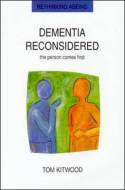
book cover
I wonder how many of those people highlighted in the Francis Report also had a form of dementia - whether diagnosed or not? Personhood and the need to acknowledge and sustain the person are not new.

Even if a service is person-centred in terms of the environment, meal choices, therapeutic options, belongings, personal space, proximity to home and relatives ... the crux at the center is the attitude of staff, and their having the time and space:


"to be"

person-centred

Additional links:

Mumsnet

Atkins, L. (2010) NHS 'must lessen trauma of miscarriages' Parents web forum Mumsnet calls for new code of practice to help women who lose their babies, The Guardian, Tuesday 2 March.

Image source:
http://drugsreference.co.uk/books/books.php?cat2=Caregiving

Wednesday, January 13, 2010

'situated' in Hodges' model #2

So, Hodges' model is person-centred and situated
- a conceptual springboard for all.

In the 1970-80s the nursing process challenged task-based care.

Ever since we have stressed individualised, personalised care and now today self-care.

Interpersonal and communication skills are central to nursing theory,
practice, management and informatics.

In Hodges' model the individual is the primary focus*.

The science and art of nursing
is predicated upon the
nurse - patient
relationship.

Situated = 'Its a duet' (anagram)


*Inclusion of the 'group' in the model also facilitates
consideration of relatives, parent-child, family, community and populations.