Monday, January 31, 2011

Dementia care: communication in nursing homes

In nursing home liaison the importance of communication quickly asserts itself (as it does throughout health and social care). As an organisation effective communication is evident (or should be) at all levels:
  • Corporate: across the 'group'
  • Management: within the home
  • Clinical: continuity of care between shifts, days - nights
  • Care staff and residents - especially those with challenging behaviour
  • The care home (staff), relatives and community
This week and as also recognised for colleagues in the future, my role will focus on education. In particular reviewing the background, theory and practice of communication with people who are more severely disabled by this condition. I've sixteen slides as a guide, a lesson plan but I will be using a flipchart (arriving early to scribble away) with the intent to engage the audience. Given my pre-occupation with information I want to mix and match as follows:
  1. Use information as a central concept, not technically but personally as per self-awareness, knowledge and orientation, person-centred care.
  2. Have people contemplate communication in a practical sense.
  3. Finally, obviously ensure that what is discussed and shared is directly related to their work, the care needs and challenges of the residents (and families?).
On the information front I'm sure I can employ the conventional and simplified communication model:

SENDER - channel - RECEIVER

This may appear mechanistic but it's an effective way to highlight the real difference that Health Care Support Workers - and indeed family and friends can make to resident's lives. Referring to this model I can demonstrate the very upsetting inequalities that are often found here. The audience can contrast themselves as SENDER and RECEIVER with each other and in care scenarios.

We will identify and acknowledge the deficits that people living with dementia must contend with and endure. This is to review previous learning and ensure staff fully appreciate the care situation. More positively the session will stress the role of staff as builders and agents of personalised care with a great contribution to make.
  1. They can consider (critically) the care environment - yes the 'home' - as the source of potential noise
  2. When there is an imbalance in the capabilities, comprehension and meaning between SENDER and RECEIVER skilled, insightful, and patient staff can compensate, addressing the person's unique needs.

If there are matters that cannot be resolved then these 'risks to person-centred care' should be carried forward to management: a prescription that must be repeated as necessary. With the purported high rate of staff turnover in homes (is that a myth - what are the figures really?) they should be able to leverage these FFIs - frequent first impressions - from new staff, before they are also part of the furniture.

Allied with this is a request for support in person-centred care. For me these two go together and it's good that this 2nd session follows tomorrow. This is an opportunity to introduce the Health Care Domains Model and build upon the points raised and factor in the questions and issues raised by the staff.

Critically across all these layers of comms is: Leadership. A key part of that of course is recognising training needs and pursuing change.

Thursday, January 27, 2011

Proximity: Relationships, Records, e-Health - Person-centredness near and far

When data protection and confidentiality is debated "the need to know" is often wheeled out as a rationale for access to personal identifiable data.

See the following:
NHS Confidentiality Consultation - FIPR Response (esp. #18).
DoH, Confidentiality, UK

In addition, if I need to access the record of patient held at hospital 'x' from hospital 'y' what is the health care relationship that prompts and justifies this need?

At present visiting nursing and care homes, you go knowing that data capture and recording (care assessment) is a fundamental requirement. Having a secure laptop for community has long been promised. While tech solutions are available and implemented elsewhere, my lack of such technology prompts me to imagine a future visit. ...

Pulling up at the nursing home I walk up the drive, ring the bell. While I wait the new tablet device in its bag has already introduced itself to the home. As I am allowed in - my identity assured - the tablet continues its dialogue, it:
  1. Downloads and updates existing active client data.
  2. Downloads additional data as per the agreed dataset on the new referral.
  3. Checks on items 1-2 with a review of recent prescribing for key psychotropic medicines.
  4. It checks the most recent NICE, Cochrane evidence and reconciling the local care knowledge. (This may seem excessive at present, but come personalised medicine this will be crucial).
  5. Will check on most recent clinical reviews and due dates.
  6. The h2cm template is there ;-) ready to present the care domain summary for the general physician ... and possibly (roles?) the next care professional to visit this home and this resident.
The significance of relationships is usually denoted by distance. Personal space is rather obviously spatial. This is how we recognise (well one of the ways!) the meaning and significance of an intimate relationship. In care situations with individuals who are confused and potentially aggressive we are conscious of the need to have due regard and respect for that person's personal space. Spaces and boundaries have to be negotiated in a variety of ways and means. 

Health information technology has already made effective use of role-based access to systems. If we take person-centred care to the nth degree, proximity can also count as it does in mobile health (m-health). Whilst to effect a role is to be in a certain location and context (sat at the office PC in the hospital) roles are organisationally and politically defined. Proximity is also contextual and situated in other ways, my proximity to:
  • the nursing home;
  • the individual's room;
  • the individual themselves.
  • (and their relatives)
While telecare / informatics can deliver a dividend in remote care, it is essential that it can also demonstrably support person-centred care. The best way (clinically assured) to do that for many activities is person-to-person contact. Just because one-side of the relationship may not recall the encounter as little as five minutes after, does not mean that there is no value in sustaining the ring of the bell, the exchange of s-miles, the record that results and other background conversations.

Image source:
Gestalt - proximity
http://graphicdesign.spokanefalls.edu/tutorials/process/gestaltprinciples/gestaltprinc.htm

Tuesday, January 25, 2011

Healthy Sleeping Tips With Consumption Foods

What you eat during the night turned out to be a big enough impact on the quality of sleep. You actually can easily get better rest by simply making some changes and added some specific foods that help you sleep.

One thing to remember, you do not need to eat these foods right before bed. Because, this will only make you wake up due to increased blood flow to the digestive system.

Eat these foods an hour or two before you go to bed. This will provide an opportunity for the digestive process so that the effect or efficacy of this food will taste. Here are five types of foods that help you sleep better:

1. Cottage cheese

This type of cheese is the most perfect source of protein for you before bed. This cheese contains casein protein which is absorbed slowly by the body. Casein will distribute amino acids into muscle tissue for several hours after consumption.

In addition, the cheese helps you sleep well because it contains amino acid tryptophan, which is naturally going body converts into two types of hormones that help you sleep, ie melatonin and serotonin.

2. "Oatmeal"

Although most people think of oatmeal is the menu for breakfast, these foods are also useful at night. Because the carbohydrates in oatmeal trigger the release of serotonin in the body. Serotonin is a hormone that makes us comfortable, reduce stress, and makes the mind is more calm.

Because oatmeal is digested more slowly, the selection of food is certainly very appropriate. You do not have to worry about waking at night due to your blood sugar levels soar.

Add apples on the menu with a little cinnamon oatmeal. You can also serve it with skim milk.

3. Peanuts or peanut butter

Other foods that you need to consider to improve the quality of sleep is nuts or natural peanut butter. Nuts are a natural source of niacin, nutrients can also help pelapasan serotonin in the body. Both of these foods do contain fat and calories are slightly higher. Therefore, you must wisely manage the portions. By take it in moderation, both types of these foods can help you find success in diabetes management.

To get the best results, serve peanut butter with whole wheat bread.

4. Warm milk

Drink this one is already legendary in helping you to sleep faster. The reason behind the benefits is the content of tryptophan. For most people, presenting it in the form of hot drink will make the mind more calm and relaxed.

In addition, milk also contains calcium which will help the brain regulate the production of the hormone melatonin, a naturally functioning regulate your sleep cycle every day.

Add honey if you prefer the natural sweetness and that too will add carbohydrates to help release serotonin.

5. Wine

Well, the last meal you need to consider in improving sleep is the wine. This fruit is the only one that contains the hormone melatonin. Therefore, by adding fruit regularly in your fine dining menu, the body attempts to form a sleep-wake cycles in nature will be helpful. As a result, you will be able to sleep more quickly and soundly every night.

How to serve it, you can mix the pieces of grapes in a bowl of yogurt. This menu will be a perfect snack before bed.

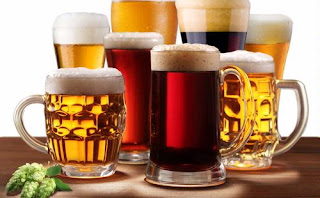
The Benefits Beer For Health

The Benefits Beer For HealthBeer is the third most popular beverage in the world after water and tea. This drink is also known to be the oldest drinks and had made long before recorded history. Although beer can be intoxicating but have touted the health benefits.

In the Western countries is a true beer drinker. It was almost no activity that does not involve beer, ranging from watching the football, play cards, get together, get together at the bar, barbecue party, and other special events.

In general, the beer is made from a mixture of water, rice or wheat grains, fruit and yeast. Brewing beer-making process is called. The process begins by soaking wheat seeds to germinate (malted) and then heated to produce the sugars and flavor. Some brewers sometimes use rice or corn and using the extra fruit, herbs and spices to produce a unique flavor.

The next process is to mix the seed sprouts, grains that are not heated in water. The resulting sugars and starch solution and then poured and difermensikan to produce beer. Clarity of the color of beer depends on the level of roasting. The color of dark beer that comes from wheat that baked until slightly darker.

Alcohol content in beer is not so much compared to other liquor, like vodka or whiskey. Alcohol in beer varies between less than 3 percent to 40 percent (by volume) depending on the type and manufacturing techniques.

Make healthy

Although classified as liquor, but various studies show beer, like wine, if consumed in moderate doses can be healthy for the body. Basic ingredients of beer making is a source of carbohydrates, B vitamins and potassium.

"The scientific evidence says alcohol, whatever kind can increase levels of good cholesterol and reduce heart attack risk by 30 percent," said Eric Rimm, ScD, a researcher from Harvard University.

He also said alcohol can improve insulin sensitivity and reduce the risk of diabetes. Because beer also contain high enough fluids, beer consumption also reduces the risk of kidney stones. In small doses of alcohol also can make blood circulation more smoothly.

Even so need to be considered a healthy dose of beer, ie no more than two doses. The recommended dose is 12 ounces (equivalent to 1.5 cups) of beer each day.

"Excessive consumption may eliminate health benefits of beer and increase the risk of liver disease, cancer, cirrhosis, alcoholism and obesity," says Rimm, committee members Dieteray Guidelines 2010.

He also suggested that beer is not consumed by high-calorie foods, including small meals (snacks) that are usually available when watching sporting events or chatting casually.

Monday, January 24, 2011

1st Int. Congress of Nursing Models and Theories: Colombia 24th-25th Feb. 2011


I am delighted to report the news that the
Health Care Domains Model
will feature at this International conference.

In November I received an invitation to be one of the main speakers from the Grupo Gics Investigacion Team; and so next month I will be heading south to Paipa, Boyacá, Colombia.

This prospect would not be possible without the support of the conference organisers - GICS and Prof. Wilson Canon Montanez, Nursing Faculty of the University of Santander UDES (Bucaramanga-Colombia) and my employer Lancashire Care NHS Foundation Trust.

Recently a group of Nursing Faculties of three major Universities in Colombia (Universidad de Santander UDES, Universidad Pedagogica y Tecnologica de Colombia UPTC y Universidad de los Llanos UNILLANOS) have come together to organize the First International Congress of Nursing Models and Theories.

This congress will be held in the city of Paipa-Colombia 24 and 25 of February, 2011:
http://www.uptc.edu.co/eventos/cong_enfermeria/index.html

I very much look forward to this trip for several reasons:
  • New people to meet and things to learn.
  • This invitation literally puts h2cm on the map (so I must deliver)!
  • It is marvellous to see faculty and nurses in Colombia re-invigorating thought about models of nursing.
  • I have never travelled this far south - how will Orion look?
This will be a great adventure, but before then - where's my checklist: presentation(s), jab, tabs, passport...

Thursday, January 20, 2011

Nursing: magnetic Force 5

Back in 2009 I came across a post - Nurse magnets crucial for recruitment and retention about the 14 Forces of Magnetism:
In 1983, the American Academy of Nursing conducted a survey of 163 hospitals to learn why some hospitals attracted and retained well-qualified nurses who were devoted to quality patient care.
The 14 Forces are listed and described by the ANCC. The forces themselves include:
  • Force 1 Quality of Nursing Leadership
  • Force 2 Organizational Structure
  • Force 3 Management Style
  • Force 4 Personnel Policies and Programs
  • Force 5 Professional Models of Care
  • Force 6 Quality of Care
  • Force 7 Quality Improvement
  • Force 8 Consultation and Resources
  • Force 9 Autonomy
  • Force 10 Community and the Hospital
  • Force 11 Nurses as Teachers
  • Force 12 Image of Nursing
  • Force 13 Interdisciplinary Relationships
  • Force 14 Professional Development

The professional, organizational, and political (policy) emphasis of the 14 forces is obvious and becomes clear when each is weighed in terms of where it sits within the domains of h2cm.

Try it as an exercise. ...

Recruitment is ALL about magnetism.

If you are unsure, ask a magnet about the meaning of retention.

Demographics are already applying pressure upon these forces of magnetism. Not just when referred to explicitly in the USA within organizational media; but globally. Demographics is another magnet - it approaches with increasing force.

From here in the UK (and readers elsewhere) we have to exercise care when models are mentioned. While the theorists and philosopher's of nursing nail their definitions to the mast (h2cm?) there remains a models muddle, not just in the variety of models of care, but in the levels at which they operate. This is not a criticism, it's an observation - consider Force 5:
Force 5: Professional Models of Care
There are models of care that give nurses the responsibility and authority for the provision of direct patient care. Nurses are accountable for their own practice as well as the coordination of care. The models of care (i.e., primary nursing, case management, family-centered, district, and holistic) provide for the continuity of care across the continuum. The models take into consideration patients’ unique needs and provide skilled nurses and adequate resources to accomplish desired outcomes.
In the US in particular 'models of care' (moc) often refer to finance and accountability of costs (the market process), in the UK moc might refer to commissioning. In Force 5 the addition of 'Professional' (as the original author's no doubt recognized) is crucial. If you repeat the above exercise, plotting Force 5 on the Health Care Domains Model then you see how Force 5 works for nursing and remains to this day a great achievement as a yardstick for quality, assurance and retentive power.

In the almost 30 years since the research on the 14 Forces, I do wonder though if there is a need to imbue the following with magnetic properties:
  • person-centred care;
  • self-care;
  • carers and public engagement;
  • prevention;
  • public (mental) health
  • and informatics?
Yes, many of the above can be assumed to lie within the existing Forces 1-14. Health and social care are not static. Nursing has much to contend with from the level of the individual practitioner through to the group within an organization. The 14 Forces of Magnetism are well established in the USA and deservedly so, they clearly deliver.

In the political and economical heat of an economic recession, however; magnets may reach their particular* Curie point. Then they cease to work.

The constant bangs and knocks of change, the incessant hammering of party politics and the 'market' on the door of "high quality nursing care" can also take its toll on magnetism.

Nursing needs to take care.

Related post on Healthcare IT News:

Top 10 trends for 2011 include IT, new care models

*OK it should be constant, but like our patients these magnets are not all the same - they have varying levels of vulnerability.

To follow some definitions from an olde book ...

Monday, January 17, 2011

Personal realities and in the media

Ordinarily I would be completely lost in tonight's Horizon - What Is Reality? at 9pm BBC2. I will be watching, but I won't be as lost as I have been.

Today I took a big step forward - sorting 'issues' that will allow me to purchase a new home. I ('we') also resolved the post-marital issue of pensions. This has proved a major reality re-orientation factor since July 2008. There is the old house to sell, but nonetheless real progress.

I am really looking forward to the NW England Drupal meet in Manchester on Friday. That's another reality to immerse oneself in - especially Drupal 7!