Showing posts with label arts. Show all posts

Sunday, December 19, 2010

Shared Approach: 3 keys (and a certain conceptual framework)

Before we trip into 2011 let's make a quick return to 2008 and the three keys to the Shared Approach in mental health assessment [NIMHE, 2008] which are copied below.

In between each one I have highlighted how the Health Care Domains Model can contribute ...

1) active participation of the service user concerned in a shared understanding with service providers and where appropriate with their carers;

In the end (or at the beginning!) a model of care or assessment tool is only as good as the person using it.

To progress with key #1 there are in fact two locks to open. These are in the form of 'using' and 'user'. H2CM incorporates the individual from the outset. The model encourages consideration of the client's beliefs, preferences, and experiences ... Can the client and carer actually use the model themselves to help understand their needs, their care plan and interventions? Is there a homework exercise there for them?

Do they have capacity to decide? Do they need support - an advocate? How do we ensure the carer is factored into the care equation? Well, in h2cm that's through the social domain.

2) input from different provider perspectives within a multidisciplinary approach, and;

Do you know what "different provider perspectives within a multidisciplinary approach" look like?

Well just envisage that for a few moments. ...
A scary exercise, eh?

In order to take those different perspectives and integrate them a common framework is surely needed?

Artists are lucky they use perspective as an integrative lever on paper, canvas, or whatever medium.

Clients, carers, health and social care professionals need a canvas of their own, BUT one that is sufficiently generic and agnostic to be 'owned' by all. 

3) a person-centred focus that builds on the strengths, resiliencies and aspirations of the individual service user as well as identifying his or her needs and challenges. NIMHE (2008)

H2CM can support and foster person-centred care. The model is situated: there is one (changing) situation with the person at the center. Whatever the context -

strengths, resilience, stresses, vulnerabilities, aspirations, needs, challenges

- the care domains model is fit for purpose. Health and social care is dynamic, in person-centred care that focus needs to change accordingly. Our assessments and evaluations need to resolve the SCIENTIFIC, SOCIOLOGICAL, POLITICAL, INTERPERSONAL and SPIRITUAL dimensions of care while assuring the BIG picture.

Reference:
The National Institute for Mental Health in England (NIMHE) and the Care Services Improvement Partnership. 3 Keys to a shared approach in mental health assessment. London: Department of Health; 2008.
Available from: http://www.3keys.org.uk/downloads/3keys.pdf

Tuesday, November 16, 2010

The Beauty of Diagrams: Vitruvian Man BBC Four

Tomorrow a new six part series begins on BBC Four.

Diagrams, conceptual frameworks and cognitive spaces have driven my interest in models of care and h2cm for decades:

1996 Peter attends 'Thinking with Diagrams' Colloquium, IEE, Savoy Place, London. 18 Jan BCS-SGES et al.
Professional Group C4: Digest No: 96/010
Chronology

I also maintain a diagrams listing on the sciences domain listing, suggestions welcome.

So, really looking forward to this!

Friday, October 29, 2010

HCI 2011 Health, Wealth and Happiness Call for Papers


The 25th British Conference on Human-Computer Interaction (HCI2011)

July 4th - 8th, 2011 at Northumbria University, Newcastle-upon-Tyne, UK.

The HCI Educators conference, Workshops and Tutorials will be held on 4th and 5th July, 2011 and a Doctorial Consortium on the 5th July. The main conference runs from the 6th-8th July, 2011. HCI 2011 is organised by the PaCT Lab (Northumbria University) in cooperation with the British Computer Society.

This year we will be looking for papers to put in our alt.hci sessions. So if you think your work doesn't usually make it into this conference then maybe this year is your year.

Accepted papers will be published by BCS in the annual conference proceedings, freely available online in BCS Electronic Workshops in Computing (eWiC) and will also be included in the ACM digital library.

Important Dates:
  • Full Paper and Workshop submission: 21st January, 2011
  • Workshop notification of acceptance: 11th February, 2011
  • Work in Progress and alt.chi submission: 18th February, 2011
  • Short and Posters  submission: 18th February, 2011
  • Demos and Experiences submission: 18th February, 2011
  • Doctoral Consortium 18th February, 2011
  • Panels: 18th February, 2011
  • Notification of Acceptance for all other categories: 8th April 2011
  • Camera-ready copy for proceedings required by 6th May 2011
Deadline for author registration: 4th May 2011

Conference: 4th July - 8th July, 2011

Conference Scope and Description:

Human Computer Interaction is a key area of computing. This is the leading conference in the field of Human Computer Interaction in the UK. It covers the design, evaluation and application of techniques and approaches for interacting with devices and services.  HCI is now on its 25th conference and at this anniversary we ask you to reflect on our theme of Health, Wealth and Happiness. Technology is posed to play a growing part in our health and maintaining well being into older age; wealth manifests itself in many ways, many of which we do not always recognise - relationships, richness of life experience, creativity and innovation, knowledge and qualities of character. Lastly is there a relationship between happiness and technology use, will more gadgets increase our well being? And as ever contributions in any aspect of HCI are welcome.

Suggested topics:

We solicit original research and technical papers not published elsewhere including the following topics:
  • Affective interaction
  • Aesthetic interaction
  • Art and interaction
  • Bodily interaction
  • Cyber-relationships, sex and eroticism
  • Design and Evaluation methods
  • Ethnographic and field studies
  • Ethics and HCI
  • Experience Design
  • Fun and Play
  • Health informatics and technology
  • Human values
  • Information visualization and presentation
  • Interaction Criticism
  • Moods, meditation and relaxation
  • Musical and audio interaction
  • Novel interaction techniques and devices
  • Privacy, Security and Trust
  • Social networking
  • Spirituality and Beliefs
  • Sustainability and HCI
  • Ubiquitous, pervasive, and mobile interaction
  • Universal design
  • Usability studies
  • User Experience
  • Wearables and fashion
  • Wellbeing and technology
Keynote Speakers
  • Abigail Sellon, Microsoft Research, UK
  • Gregory Abowd, Georgia Tech, USA
Paper Submission:

Submissions must be in an electronic form as PDF format. All submissions should be formatted to the ACM standard, see http://www.acm.org/sigs/publications/proceedings-templates , and will appear on-line in the BCS EWiCS series and the ACM Digital Library.

Submissions should be made through the EasyChair system, which will open for submissions in November and will be linked from the conference website http://www.hci2011.co.uk/ with detailed instructions. We have put together an international review panel. Submissions will be peer-reviewed by at least 3 peer-reviewers, selected by the appropriate chairs. Additional guidelines can be found on the conference's website.

It is a condition of acceptance that at least one author must register for each accepted paper, no later than the early bird deadline of 4th May 2011.

Monday, May 31, 2010

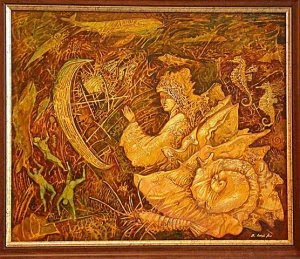
Old man of the sea (or 'heroic informatics')

The seas have long been an information and communications channel ....

My source: AWADmail Issue 408 April 25, 2010

From: Steve Patterson

Lui Ko, ProteusSubject: Old Man of the Sea
Def: A tiresome burden, especially a person, difficult to free oneself from.

Outside of the Arabian tradition, the Greek mythology includes Proteus and Nereus, both titled old men of the sea, and shape-shifting gods, to boot. Heroes in search of secret information had to wrestle one of these gods, as the sea touches even the remotest shore, and the flow of rivers was always bringing more information to them.


Image source: Gallery Lui-Ko Proteus, 2003, oil, canvas, 60x80 http://www.unesco.kz/lui-ko/

Tuesday, May 25, 2010

What's good for art students ....


Never take the stylus or brush
in your hand if you have not first
constituted in your mind all that you have to do.


Leon Battista Alberti, On Painting, 1435-36


My source: 16 May 2010, Visit to The British Museum, Italian Renaissance drawings.

Is this my excuse for taking so long with a new website?

Sunday, May 23, 2010

Drawing - the stage of conceptual design

The health career model
- drawing -
for health and social care professionals, et al.. ...

"The Italian word for drawing, disegno,
also encapsulates the stage of conceptual design.
The ability to imagine a design
and then develop it on paper was an increasingly valuable skill."


The Purpose of Drawing: The British Museum, May 2010.

Additional link:
Disegno: Italian Fine Art Drawing


My source: 16 May 2010, Visit to The British Museum, Italian Renaissance drawings.

Sunday, May 16, 2010

Nursing: Art and Science ... Fra Angelico to Leonardo

I arrived in London at noon in preparation for the Higher Education Academy mental health SIG meeting tomorrow at King's College, which includes a presentation on the health career model.

The afternoon was spent at The British Museum exhibition Fra Angelico to Leonardo: Italian Renaissance drawings:


Early in the life of W2tQ visits to the Tate in London and Liverpool prompted a blog post or two.

Visiting this stunning exhibition even before I fastened and feasted on the first drawing, the subtitled walls announced the various exhibition themes and for me instantly suggested links to health care:

Drawing the father of our three arts -
architecture, sculpture and painting

Georgio Vasari. Lives of the Artists, 1568.

sculpture equates to medicine-surgery
painting to nursing
our care models provide the architecture and palette*

We all draw (model) individually in thought and reflection, these are then shared in our various collaborations and engagements, media forms and records.

Do we need a 21st century renaissance
in the study and appreciation of models of care?

Additional links:
Financial Times: Review


*Red, Green, Blue, (Black & White)

There are a few more prospective posts arising from this museum visit - time - will draw them out.

Thursday, March 25, 2010

Design an interactive space - 2 meters square - for Expolab project

My source: DESRIST discussion LinkedIn

Hello DESRIST members.

This is about an interactive design project, and the folks at Citilab are very interested in design research. Check it out if you're interested.


Letting you know that Citilab Cornella has an open call for exhibits that explore digital technology for their new project "Expolab". This experiment challenges designers to design 1 or more Expolab cubes with interactives that explore how new digital media and tech affects how we share memories, connect, travel through time and space, work, and experience safety. An opportunity to experiment, and work with the brilliant Expolab team Irene Lapuente, Ramon Sangüesa, and Astrid Lubsen of Citilab.

Start with the cubed 2mx2m space, then modify the space/walls as needed to make it experimental and interactive. Spaces will be equipped with electric and internet connections if needed. Citilab will build 6 of these and put them on display in Barcelona. Expolab cubes can have any number of walls, you can design the whole thing as long as it fits in 2mx2m. The Tech Virtual hosts free 3D prototyping space in Second Life for you to build or document your entry ( http://slurl.com/secondlife/The%20Tech%202/160/211/33 ). If you'd prefer to use your own tools that's fine too, just upload your screenshots after creating a project at:

http://thetechvirtual.org/projects/expolab

Full design brief at http://thetechvirtual.org/projects/expolab/expolab-brief-3.pdf

Looking forward to some new input on this experimental venture! Expolab team comes online for live design reviews Thursdays at 13:00 EST / 10:00 PST / and 18:00 CET (Barcelona). Did I miss anything? Send a note to rketner[at]thetech.org

About Expolab: http://expolab.net/eng/?page_id=5
"Expolab is a new way to understand exhibitions. It is a laboratory devoted to researching and creating new exhibitions in the area of technology, innovation, science and design, which are the main focus of work at Citilab. Expolab raises the possibility of creating exhibitions with strong citizen participation and contribution from the very beginning of an exhibition, and not just using the audience as providers of feedback once the exhibitions is one. This represents a new challenge within the world of museums and exhibitions.

Additional links:

5th DESRIST Conference Design Science Research http://desrist2010.iwi.unisg.ch/

Sciences knowledge domain: Virtual Reality, Visualization resources
(suggestions, reports of broken links appreciated):

http://www.p-jones.demon.co.uk/linksTwo.htm

Tuesday, November 24, 2009

Being all things to all people: and virtually 2nd

I don't ever want to be like 'jam', as that may indicate that one has also become a statistic. In IcT though it's very difficult to spread yourself as completely as you might like. The desire and apparent need to 'multi-webtech' is profound. So it is gratifying (if that's the right word?) when news comes through that the grass is not always greener being an 'early adopter' and in with the in-crowd. For me this missed opportunity and news comes c/o Second Life.

As with the philosophy dialogue there is a virtual effort that dates back to 1991. I realised ages ago that if you are going to build a community dedicated to the compound conceptual space that is Hodges' model then virtual - augmented reality is the space to Be. I have long thought of the model as the ideal portal for a virtual learning environment. So here is news that actually indicates a trend, a shift in the maturity of the web as the established newspaper media also takes stock of traditional journalism, its investment in web content and how to monetise. The latest sign of change is today's news of a possible NewsCorp and Microsoft alliance against Google in The Independent. Here's the Second Life news item:

Subject: [NetBehaviour] Second Life To Remove Free Content From Web Search.

"In a move that continues to shake the Second Life community of content creators, merchants, and consumers, Linden Labs has declared that free virtual content will no longer be searchable without listing payments on their website portal -
(http://wiki.secondlife.com/wiki/Linden_Lab_Official:Managing_Freebies_on_Xstreet_SL_Roadmap_FAQ);
and additional fees will be added with the intention of discouraging content listed for inexpensive selling prices. The move is particularly troubling because the online Web listing service is the de facto search engine for virtual content in Second Life, since the in-world search tools are unable to provide information about an object beyond name and location - basic textual descriptions, pictures, or descriptions of licensing, size, or content-category are not possible. While initially the change was explained as a response to community feedback, the residents involved in this feedback process were revealed to be fewer than 100 in number, primarily larger merchants among a community of millions. Within 24 hours of the announcement, the feedback thread (https://blogs.secondlife.com/message/38923#38923) has swelled to over 1,000 overwhelmingly negative responses. Additionally, in-world protests have erupted throughout the day, and over 20,000 objects have been voluntarily removed from the online store by angered merchants."

Read on for more details on the brouhaha.

Adding to the controversy are the officially stated justifications in the FAQ
(http://wiki.secondlife.com/wiki/Linden_Lab_Official:Managing_Freebies_on_Xstreet_SL_Roadmap_FAQ),
such as 'They [free content listings] hinder the shopping experience because a "sort by price" puts all freebies first,' and the perplexing statement 'They [free listings] garner so much attention that Residents are driven toward the freebies instead of quality, fairly priced items.'

Various independent virtual content listing sites have been proposed, such as Meta-life.net (http://meta-life.net/) and Slapt.me (http://slapt.me/), but attempts to post this information on the Second Life forums has been met with aggressive administrative censorship of these links.

Found originally on slashdot.org
My source: CI list and marc garrett (FurtherField)

Additional links:
FurtherField
NetBehaviour for networked distributed creativity

Tuesday, November 3, 2009

h2cm: windows on the mind, body, society and State

h2cm is not just a window and handle on the mind and that of patient's and carer's.

Art for Saleh2cm can reflect (as per its original purposes):
  • health and social care policy;
  • the aspirations of local care communities and economies;
  • signs, symptoms - priorities;
  • care plans, actions and care pathways;
  • research objectives;
  • procedures;
  • ethical deliberations;
  • recovery, relapse prevention;
  • information requirements;
  • learning objectives;
  • and outcomes.
  • ...
HOW Hodges' model can achieve this...?

Now that IS the question that can really open the windows, whether you believe in four or five....


Image source: with thanks to - FineArtAmerica.com: and the artist of -
I Marry Your Mind to Lights Window, Stephen Lucas

Saturday, September 26, 2009

Foundations, projects, corners and cornerstones

Ok, so you have a new project - that's great!
Yes, we are going to build something - outstanding!
Sounds absolutely marvellous!
We are going to use up-to-the-nanosecond project management tools.
And you're going to do it by the book, charts and real-time tags.
Yes, with a dash of intuition plus - you know - gut instinct!
Well sure, pleased to hear that too.
We will take account of history, learn the lessons -
we've a researcher onboard you know?
Building a world-class team that's all fleet of foot and mind.
We'll tick all the boxes, check all the corners and leave no stone unturned.
Truly admirable, but how many boxes and corners have you got and how many cornerstones* will you need?


Eh?
Hey listen up. Corners are for losers,
naughty children
and people lost in the dark.

Nobody is going to be stuck standing in the corner on this one!

Oh - right.

Well good luck....


Image sources:
'Cornerstone office': Cornerstone Corp. Center
Dan Flavin: at Artnet.
Inspired by the word 'cornerstone' and Untitled (Corner Piece) 1969 on visit to Tate Liverpool, 25 September 2009 (not the piece illustrated above):
Flavin made a number of works intended to be shown in corners, engaging directly with the architecture of the gallery. His use of commonly available fluorescent tubes enabled him to explore light as a non-physical material, animating gallery walls. The size of the work was determined so that the units could be fastened in the centre only, without having to be anchored to the floor. The artist rejected any symbolic significance of the object, insisting that it was simply a form that made good use of a corner.

Question: How many corners are there in Hodges' model?

*Cornerstones: here referring to stakeholders, sponsors, owners, partners, investors, builders, architects, designers...?

Tuesday, July 28, 2009

Nursing (Health) Art or Science...?

thatch - weft and weaveIs nursing an art or science?
It is simply and complexly both ...

"Warp. Weft. Woof! are terms from weaving: the threads or yarns that run lengthwise on the loom are called the warp; the crosswise threads or yarns are called the woof or weft. The web is the name given the completed woven fabric, and it also has wide figurative use: What a tangled web* of circumstance you've woven.
All these are Standard." Ref.

*Also known as the care plan!

Original image source:
http://www.wovenwire.co.uk/plainweave.htm

Additional links:
http://www.africancrafts.com/