Showing posts with label vibrant management. Show all posts

Tuesday, March 2, 2010

Person-centred care and semantic inflation

Time laughs at us, with us and has the last laugh. If you are ever complacent and by virtue of your years you venture to think to yourself:

Well we've been working on this now for 20-30 years look at the progress we've made. ...

Time is always there to remind you:
Hey, just who are you trying to fool?
You are a lifelong learner!

The number of personnel and services that describe themselves as person-centred is an ongoing theme of so many CVs, policies, SLAs, commissioning and consultant's presentations and lectures. ...

Whether in a ward, service, or organisation's philosophy, person-centred is a term that is being diluted to the extent that semantic inflation devalues what is supposed to be the main currency? Or are we admitting that this is the cost of the political games that people play? Whatever your view, there are insights of progress won, but also reminders on how much remains to be done.

Health and social care being multicontextual demands the existence of multiple currencies. One additional currency begs that we compare A, B, C with the evidence base.

If this is the crucible of our person-centred times then what is burning?
  • Nursing ethics?
  • Nursing education?
  • Idealistic aspiration? (Yes, we will get there!)
  • New Age incense?
  • Policy initiatives?
  • Funding allocations?
  • Nursing activism (Or, are there any balls in the house)?
  • Service infrastructures?
Although the media temperature is rising here in the UK, as health, itself economically recumbent is moved to ICU being so politicised; the Francis Report provides evidence of a dire lack of person-centred care. Recalling my basic nurse training: what can be more person-centred than ensuring that a patient has the necessary fluids and diet?

For women who suffer a miscarriage - where should they be nursed as debated in today's Guardian newspaper? What is person-centred care in maternity and gynaecology services?

In-patient provision and transitions from child-youth-adult provide other opportunities and major challenges for health and social care to demonstrate their person-centredness.

There are so many ways to be person-centred, so many levels, some may even be contradictory(?).
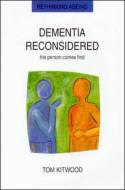
book cover
I wonder how many of those people highlighted in the Francis Report also had a form of dementia - whether diagnosed or not? Personhood and the need to acknowledge and sustain the person are not new.

Even if a service is person-centred in terms of the environment, meal choices, therapeutic options, belongings, personal space, proximity to home and relatives ... the crux at the center is the attitude of staff, and their having the time and space:


"to be"

person-centred

Additional links:

Mumsnet

Atkins, L. (2010) NHS 'must lessen trauma of miscarriages' Parents web forum Mumsnet calls for new code of practice to help women who lose their babies, The Guardian, Tuesday 2 March.

Image source:
http://drugsreference.co.uk/books/books.php?cat2=Caregiving

Monday, January 25, 2010

Nursing and care homes: the new schools 4 basic nursing care?

I do not wish to denigrate the quality of care in nursing homes, as I've blogged previously there are others better placed to do that when needed. In some the nursing care is exemplary and this is evident not just in their inspection rating, but the morale of staff, the reports of relatives and local community plus other indicators - especially when you visit and use your senses. As a nurse you are duty bound to assess the quality of care wherever your practice takes you. In the homes where the care is very poor, there is no escape from that reality. The reality of poor care first hits visitors when they smell the home they have entered. If there is no escape for them - well what then of the residents and staff?

Now an extended and dedicated role for nursing home liaison within community mental health nursing has arrived* and taken root, this must say something about the quality of care in this sector (and not merely suggest a shortage of Consultant Psychiatrists)? Nurse, service managers and commissioners recognise that if they do not preempt the referral torrent (or trickle from some care homes!) then community teams will grind to a stand-still. Care homes need assistance even as private businesses in assuring their holistic competency.

If services do not stem that referral flow as a wave or otherwise, they will in turn become second rate first-aiders with no primary purpose. They will be forced to respond repeatedly to the same client RE-referrals, the same set of disjointed, fractured physical:mental:social health problems presenting in a series of unique individuals. And this is not person-centred care.

What the nursing home liaison role says is that here is one place we can locate the theory-practice gap, a skills gap and a lack of integrated, holistic person-centered care. Mash-ups may be desirable in the virtual world, but in care delivery - is that safe? Too frequently the mash-up of combined physical and mental health problems pass staff by. The problems go unrecognized, they are there: evident, but disguised; due to lack of comprehensive observation, life histories and despite the question and answer sessions at the gates (service interface). However it is described (e.g. single point), the specialisation of community mental health teams into memory assessment, intermediate, community mental health, ... depends on the vibrant management and quality of referrals.

Much is made of nursing homes registered as EMI (Elderly Mentally Ill) and their need for or access to a registered mental health nurse (RMN); but RMNs in turn rely on the ability of more junior staff to observe and accurately report the basic aspects of the resident's physical and mental state. If equity for older people in care is to be achieved, then although the care - nursing home sector is 'private' and a 'business' there must be an accommodation, a partnership when it comes to education and valuing time invested in these homes.

*Additional links:

http://www.careinfo.org/congress/pdf07/07par.1340q2-joannehirst.pdf

http://www.mentalhealthequalities.org.uk/our-work/later-life/communities-of-interest/care-homes-liaision-/hartlepool-care-home-liaison/


Image source: Neo - The Matrix http://www.dailygalaxy.com/my_weblog/psychology/