My source: Community informatics list [ciresearchers]:
Sahana Software Foundation
Haiti Earthquake Response
Status Report #1
January 17, 2010 00:00 UTC
The Sahana Software Foundation and the Sahana community responded with a massive voluntary effort immediately following the earthquake that has devastated the poor country of Haiti. Working around the clock, we have set up a hosted instance of Sahana (the first deployment of SahanaPy following a disaster!) on a public website that is already filling gaps in the information management requirements of the massive relief operation.
Major Accomplishments
We have a Haiti 2010 Sahana Disaster Response Portal - a live and active website up at http://haiti.sahanafoundation.org which contains a feeds from many of the relief agencies and links to Sahana modules that are actively being used to help coordinate the relief effort.
We have a Sahana Haiti wiki page where we are tracking all of our and others' activites at: http://wiki.sahana.lk/doku.php/haiti:start
We have a requirements page where we record all the modification, configurations, and changes to Sahana based on the mission requirements at: http://wiki.sahana.lk/doku.php/haiti:requirements
The Haiti 2010 Sahana Disaster Response Portal provides the following functionality:
1. An Organization Registry - serves to track organizations and offices working on the ground in Haiti. Organizations are encouraged to self-register and report their office locations - alternatively, individual organization office or lists of offices can be e-mailed to haiti-orgs@googlegroups.com and we have volunteers to assist with data entry and to aggregate lists from other sources. We have entered data from pre-disaster lists of organizations working in Haiti available from UN OCHA. We can assume that these organizations will be working on the relief efforts, but expect that most of their office locations will be different as most organizations have been forced to move into tents given that few buildings remain standing and usable in the capital. We are working to validate these lists with the organizations directly.
The site serves up both KML for Google Earth users and GeoRSS for everyone else, and will generate reports of organization activities and the gaps (uncovered sectors by geographic location). This site will hopefully become the main resource for accurate information about the organizations working on the ground, where they are located, and what activities they are engaged in, and the resources in terms of staff and equipment that they have available to them. (Currently, data is admittedly sparse but we expect more details to become available as the coordination efforts take root on the ground). We are coordinating with UN OCHA, Google and others on sources of accurate lists and updates.
What are the gaps in our information collection? We have a large and we think accurate list of organizations, but not much office location information. Without this, it becomes hard to generate data that can be used as a layer in a GIS system. We are encouraging people to report this information - preferably by GPS coordinates, but any location information that we can use to manually geo-reference the office is valuable. We hope to be able to enhance our capabilities such that we can produce polygons showing organization's areas of coverage by sector. Please direct organizations working in Haiti to our site to register their offices and activities!
2. A Missing Persons Registry / Disaster Victim Identification (DVI) Registry - we are working with Google and others on an agreed common standard for the exchange of Missings Persons data using the PFIF standard. The Google site at http://haiticrisis.appspot.com/ is the main aggregator collecting all missing and found persons reports and we are encouraging all people to send data to that site. [We are struggling a little as Google's feed is not fully PFIF compliant and the lack of unique record identifiers makes it more complex to set up true synchronization without the creation of duplicate records. We continue to work with Google on this and hope to have a resolution and solution within the next few hours.] We will also be embedding Google's widget on our site for collecting missing person information. Google will be making their data available via a PFIF feed and we will be importing it into Sahana's Missing Persons registry. From there, Sahana can add value to the simple lists being collected.
In particular, Sahana's Disaster Victims Identification registry - or DVI - which is used to management the handling and tracking and tracing of the deceased, dead bodies and their identification. There is currently no other known application for this and we hope that those working in this area will find Sahana extremely valuable. Sahana will have the ability to cross-reference missing persons information with the identified and unidentified deceased, thus facilitating reconciliation efforts. The Sahana Missing Persons registry has additional physical description information fields and we hope to be able to utilize some of the image matching capabilities available to extend these capabilities further. Organizations interested in utilizing these capabilities (which will not be made open for public use) should contact the Sahana team at
sahana-haiti@lists.launchpad.net.
Any updated missing persons status information will be pushed back to the main Google repository from Sahana.
3. Situation Mapping - Sahana's site is able to map all of the geo-referenced data within Sahana - primarily the organization data, but we have also manually entered a data layer of hospitals and medical facilities. Sahana has worked with members of the OSGeo community to obtain a fast tiled set of the current imagery being made available by Digital Globe. Sahana is also leveraging the constantly updated set of Open Street Map tiles. These are acting as backdrop for the offices that are being entered as part of the Organization Registry. Other data sources that are ready and available to be leveraged by Sahana and SahanaPy for other deployments include reports from Ushahidi, various point layers from Open Street Map, location names, USGS earthquakes, and locations from GeoNames. We will continue to build out these capabilities further as relevant layers are made available.
Capabilities we are working on:
The following capabilities are in the process of being developed and we expect will soon be available:
4. Request Management: We are working with the US State Department, Ushahidi and some other voluntary efforts on a project to process SMS messages with requests for assistance sent from survivors in Haiti. SMS text messages sent to a short code in Haiti will go into Ushahidi, who will have volunteer translators to add some structure to the message, identifying the sender's name, location (to the extent possible), and category of the message - a missing persons report, a request for assistance, etc. The message will go into a Ushahidi GeoRSS feed that will be captured by Sahana and fed into a simple Request Management system where the requests for assistance (such as "send water" to a certain village or neighborhood) can be made visible to relief organizations working on the ground. Organizations can fulfill or claim requests for handling and message the person back that assistance is coming. (Missing persons information will be captured by Google).
5. Translation: In addition, our translation project is now set up for Kreol and French translation and we may utilize a pool of Kreol-speaking volunteers being set up by the Service Employees International Union (SEIU) to help in these efforts. Interested translators should be directed initially to:
http://translate.hfoss.eu/wiki/Translation to become oriented in the process.
6. Shelter Registry and Disaster Victims Registry: In the coming days, we expect that there will be a requirement to start tracking the location of temporary shelters now being established, and possible registration of the survivors. We will prepare Sahana's existing registries for such purposes, which will produce further consumable data layers as well as additional missing persons reconciliation capabilities.
If you want to help:
We are using the IRC #sahana channel on freenode as our main coordination tool. Join the chat room to volunteer for tasks and someone from our core volunteer team will direct you - this room is actively staffed on a 24x7 basis.
But first, please check out the wiki pages to see what are the current requirements and areas of focus. We have a lot of volunteer Python and PHP programmers already working on the codebase, but we can probably use more. Please review the requirements page in particular to see where you might help.
We also have a large need for non-technical help - particularly for documentation support - user guidelines and instructions in particular - including some nice screenshots. See
http://trac.sahanapy.org/wiki/UserGuidelines to get started.
We also need help with Bug & Functionality testing. Please submit bug reports and feature request to: http://trac.sahanapy.org/newticket
For documentation and testing efforts - please use the development site at
http://haiti-orgsdev.sahanafoundation.org - NOT THE LIVE SITE PLEASE.
Finally, we could use help maintaining our own wiki - both the main page and requirements... much of this can be culled from the chat room logs - and helping to update some of the common public repositories of information about similar efforts, such as the crisis commons wiki at
http://crisiscommons.org/wiki/index.php?title=Haiti/2010_Earthquake, although they are doing a pretty good job at tracking us ourselves.
Remember to add yourself to the wiki as part of team, and what you are doing.
Acknowledgements
Personally, I have never been a part of such a collaborative and cooperative effort on the part of different organizations to come together and to help each other and to not replicate efforts. The Sahana community has worked closely and constantly with InSTEDD, Ushahidi, haitianquake.com, Google, the Crisis Camp participants, and others I apologize for not mentioning and we wouldn't have been able to accomplish all that we have without this, and for this I am very grateful.
The around the clock efforts of many of the Sahana community are too numerous to mention here, and at risk of leaving anyone out, I would just like to thank everyone for all that they have done and been able to do while juggling responsibilities such as full-time jobs and families.
This has been a new model for Sahana deployments - rather than waiting for a specific customer to come forward to take ownership of Sahana, we have self-deployed and I think this will be a likely successful model for the future. More and more, technology projects are stepping forward and doing good directly.
So go forth and do good.
Best regards,
Mark
==========
Mark Prutsalis
President & CEO
Sahana Software Foundation
Tel 860-499-0332
Fax 801-697-8731
mark at sahanafoundation.org
http://www.sahanafoundation.org
Showing posts with label open source. Show all posts
Showing posts with label open source. Show all posts
Sunday, January 17, 2010
Monday, June 15, 2009
DrupalCamp UK Manchester: education and a (virtual) website
DrupalCamp UK in Manchester this past weekend was a great success. The organisers, sponsors and hosts the BBC on Oxford Road did a magnificent job.
My course through the schedule found me attending:
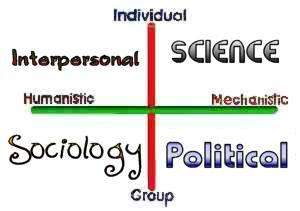 They began with Drupal being applied to education for brochureware (wish the new site was there!). This will be my starting point for Brian Hodges' old notes. These obviously need a place on the site, an archive where they are accessible next to new introductory material written to reflect:
Yes I know that is a broad agenda ('too much'), but this is about the learners, learning tools AND the models we teach being fit for purpose...?
Additional links:
Drupal.org
My review on W2tQ of Bill Fitzgerald's book 'Drupal for Education and E-Learning'
Drupal in Education - group
Nursing and Midwifery Council UK: Review of pre-registration nursing education
My course through the schedule found me attending:
- Installing and creating your first site
- Drupal for Education
- Drupal and Scrum
- Drupal Forms API
- Introduction to Organic Groups
- Creating your first module
- Using CCK and Views
- The Forms API - again
- Migrating data into Drupal
- Using Photoshop to theme a Drupal site
- Views handlers
 They began with Drupal being applied to education for brochureware (wish the new site was there!). This will be my starting point for Brian Hodges' old notes. These obviously need a place on the site, an archive where they are accessible next to new introductory material written to reflect:
health and social care, public (mental) health
informatics
education
socio-politics and the challenges of the 21st century
informatics
education
socio-politics and the challenges of the 21st century
Yes I know that is a broad agenda ('too much'), but this is about the learners, learning tools AND the models we teach being fit for purpose...?
Additional links:
Drupal.org
My review on W2tQ of Bill Fitzgerald's book 'Drupal for Education and E-Learning'
Drupal in Education - group
Nursing and Midwifery Council UK: Review of pre-registration nursing education

Wednesday, May 27, 2009
Drupalcon Paris & Drupalcamp UK Manchester
 I am really pleased to have booked my ticket for Drupalcon 2009 Paris. Last summer in beautiful Szeged was quite an experience so - next Paris...
 Next month though sees DrupalCamp UK in Manchester - can't wait. It says something about the power and flexibility of Drupal as to how quickly the site took shape - great job people!
Until then I keep reading and thinking about how to structure things - more to follow....
Additional links:
http://twitter.com/drupalcampuk
http://twitter.com/drupalcon
http://drupal.org/
Currently reading 'Using Drupal'
Saturday, November 29, 2008
BarCamp Sheffield and Digitize This Book!
 I'm in Sheffield for BarCamp, a 1st for me. Looking forward to various sessions including using a web browser to run a business, usability, 3rd sector, open source, sustainability and creating communities. ...
Yesterday - and interesting company on the train today - another book arrived for review:
Digitize This Book!: The Politics of New Media, or Why We Need Open Access Now (Electronic Mediations) (Paperback) by Gary Hall.
I'm also editing Shreves Drupal 6 Themes book review and will post it here (and on Amazon) soon.
Sunday, September 7, 2008
Some links....


http://www.comminit.com/
The Communication Initiative Network

Global Alliance for Nursing and Midwifery Communities of Practice (GANM)

EUROTHINE
Tackling Health Inequalities In Europe: an integrated approach
Sources: Community Informatics list; STS and spiritof1848 lists.
The Communication Initiative Network
Global Alliance for Nursing and Midwifery Communities of Practice (GANM)
EUROTHINE
Tackling Health Inequalities In Europe: an integrated approach
Sunday, August 31, 2008
Drupalcon 2008 Szeged, Hungary and more haste...
 I'm writing this from the Attila József Study and Information Centre here in the beautiful city of Szeged, southern Hungary - the venue for Drupalcon. The main sessions ended yesterday and today it's the code and documentation sprint.
There are a lot of heads buzzing and fingers itching to put new found pearls of Drupal wisdom into practice. The sense of 'community' here is amazing and as many people have said it's been an awesome experience (and a totally +ve distraction) for me.
All the main and birds of a feather sessions I've attended have been excellent in getting me to the point were I must make my fingers drupy from coding. I really need to get to publish a Drupal site and get some feedback about what people want to see, hear and think about. The suggestion of a 'beta' site is a great idea put to me this week.
The Drupal community also has an eye on the semantic web and several sessions have focussed on this essential ingredient for tomorrow. There are some modules here that could really support the learning and other objectives for Hodges' model:
In addition to a talk on hierarchical select, yesterday there was an equally cool presentation on The Neologism Project:
Neologism is a simple web-based RDF Schema vocabulary editor and publishing system. Use it to create RDF classes and properties, which are needed to publish data on the Semantic Web.So many challenges, much to think about and most of all much to do.
More haste...
Before I left home I had problems with my isp and account. In hurriedly uploading the website (I knew I should have left it!) I've messed up the root directory. If you go to the index.htm page it loads ok. I'll fix (some) things when I get back to the UK late tomorrow.
Thanks++ to Dan, James and Mikelis for your help and support this past week - and the NW England Drupal crew.
Well I have to say it:
Drupal and this community of people absolutely Rocks!!Now to check some documentation and listen in to code sprint.
Image sources: http://commons.wikimedia.org/wiki/University_of_Szeged
Tuesday, June 17, 2008
2009 March Manchester, UK: 4th Oekonux Conference - Free Software and Beyond...
Call for Contribution - to the 4th Oekonux Conference in collaboration with P2P Foundation
During the past decade the phenomenon of Free Software has become successful and well-known. It is still amazing how in the realm of software the creativity of so many volunteers leads to products which are useful for the whole mankind. In 1999 the Oekonux Project [http://www.oekonux.org/] started with analyzing this phenomenon and trying to understand the special features of Free Software as a social and political enterprise.
Today, beyond the Free Software world, projects based on a similar approach of peer production are rapidly emerging, including Wikipedia and many more. It is time to look at peer production from a broader perspective.
This is the goal of the 4th Oekonux conference [http://www.oekonux-conference.org/] which is done in collaboration with the P2P Foundation [http://p2pfoundation.net/]. Under the title
Free Software and Beyond The World of Peer Production - we are planning a conference where
o researchers and activists meet
o intensive discussions are possible
o experiences can be shared and learned.
We are calling for contributions about the big world of peer production.
Possible themes include (but not limited to):
o Reports from peer production projects such as -
o Wikipedia
o Blogosphere
o Design communities
o OpenAccess movement
o Open Music
o Free Culture
o Sharing platforms like Flickr and YouTube
o Free Software
o Peer production and capitalism
o Theoretical approaches on their relationship
o Peer production and commercial interests
o Peer production and the state
o Peer production and political approaches of the past
o Peer governance
o Theoretical approaches to governance in peer production
o Peer ownership
o Maintainership and conflict resolution
o Material peer production
o Existing projects
o Theoretical approaches
If you want to - give a talk - prepare a workshop - moderate a round table discussion
Please submit a short outline of your idea (~300 words) together with a short bio to projekt AT oekonux DOT de. (Mails to this address are archived on the web. Please ask there if this is a problem for you.) If you want to add some other kind of contribution or have other questions please also don't hesitate to contact this address.
About Project Oekonux: In Project Oekonux different people with different opinions and different methods study the economic and political forms of Free Software and other peer production phenomenons. An important question is, whether the principles of peer production may be the foundation of a new economy which may be the base for a new society.
About P2P Foundation: The Foundation for Peer to Peer Alternatives researches, documents and promotes P2P practices in every domain of social life. It's a global cyber-collective and aims to be a knowledge and internetworking platform for open/free, participatory, and commons-oriented initiatives on a global scale.
Important information:
o Deadline for applications: 31 October 2008
o Final decision on acceptance: 15 December 2008
o Deadline for submission of papers / slidesets: 13 March 2009
o Conference date: 27-29 March 2009
o Conference location: Manchester, UK
o Contact address: projekt AT oekonux DOT de
o Conference language: English
o Previous conference: 3rd Oekonux conference
[http://third.oekonux-conference.org/]
o More information on the conference website
[http://www.oekonux-conference.org/]
During the past decade the phenomenon of Free Software has become successful and well-known. It is still amazing how in the realm of software the creativity of so many volunteers leads to products which are useful for the whole mankind. In 1999 the Oekonux Project [http://www.oekonux.org/] started with analyzing this phenomenon and trying to understand the special features of Free Software as a social and political enterprise.
Today, beyond the Free Software world, projects based on a similar approach of peer production are rapidly emerging, including Wikipedia and many more. It is time to look at peer production from a broader perspective.
This is the goal of the 4th Oekonux conference [http://www.oekonux-conference.org/] which is done in collaboration with the P2P Foundation [http://p2pfoundation.net/]. Under the title
Free Software and Beyond The World of Peer Production - we are planning a conference where
o researchers and activists meet
o intensive discussions are possible
o experiences can be shared and learned.
We are calling for contributions about the big world of peer production.
Possible themes include (but not limited to):
o Reports from peer production projects such as -
o Wikipedia
o Blogosphere
o Design communities
o OpenAccess movement
o Open Music
o Free Culture
o Sharing platforms like Flickr and YouTube
o Free Software
o Peer production and capitalism
o Theoretical approaches on their relationship
o Peer production and commercial interests
o Peer production and the state
o Peer production and political approaches of the past
o Peer governance
o Theoretical approaches to governance in peer production
o Peer ownership
o Maintainership and conflict resolution
o Material peer production
o Existing projects
o Theoretical approaches
If you want to - give a talk - prepare a workshop - moderate a round table discussion
Please submit a short outline of your idea (~300 words) together with a short bio to projekt AT oekonux DOT de. (Mails to this address are archived on the web. Please ask there if this is a problem for you.) If you want to add some other kind of contribution or have other questions please also don't hesitate to contact this address.
About Project Oekonux: In Project Oekonux different people with different opinions and different methods study the economic and political forms of Free Software and other peer production phenomenons. An important question is, whether the principles of peer production may be the foundation of a new economy which may be the base for a new society.
About P2P Foundation: The Foundation for Peer to Peer Alternatives researches, documents and promotes P2P practices in every domain of social life. It's a global cyber-collective and aims to be a knowledge and internetworking platform for open/free, participatory, and commons-oriented initiatives on a global scale.
Important information:
o Deadline for applications: 31 October 2008
o Final decision on acceptance: 15 December 2008
o Deadline for submission of papers / slidesets: 13 March 2009
o Conference date: 27-29 March 2009
o Conference location: Manchester, UK
o Contact address: projekt AT oekonux DOT de
o Conference language: English
o Previous conference: 3rd Oekonux conference
[http://third.oekonux-conference.org/]
o More information on the conference website
[http://www.oekonux-conference.org/]
Subscribe to:
Posts (Atom)